Und dann auf "Zum Home-Bildschirm [+]".

Stöbern
genialokal zum Startbildschirm hinzufügen
Installieren Sie die genialokal App auf Ihrem Startbildschirm für einen schnellen Zugriff und eine komfortable Nutzung.
Installieren Sie die genialokal App auf Ihrem Startbildschirm für einen schnellen Zugriff und eine komfortable Nutzung.
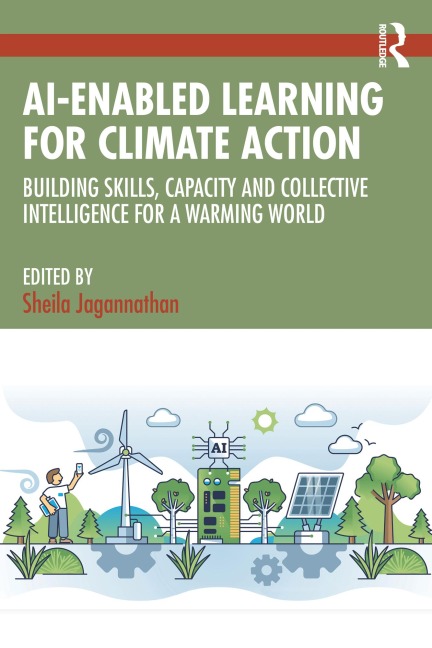
AI-Enabled Learning for Climate Action brings together scholars, practitioners, policymakers, and innovators to examine how digital learning systems, data platforms, and emerging technologies, including artificial intelligence, digital twins, and immersive tools, can accelerate climate literacy, support green skills and jobs, strengthen institutional decision-making, and enable collective action. The volume advances the editor's overarching framework that learning is a foundational pillar of climate resilience and sustainable development. Rather than treating digital learning as a delivery mechanism alone, the contributors demonstrate how learning systems function as critical climate infrastructure by building the human and institutional capacities needed for adaptation, mitigation, and long-term resilience. The chapters span global, regional, and local contexts, with examples from low-, middle-, and high-income countries. They explore how AI-enabled and digital learning approaches can enhance climate awareness and behavior change; equip youth and professionals with future-ready and green skills; support evidence-based policymaking; and enable experiential, problem-based learning grounded in real-world data. Contributors also examine how technology-enabled learning can advance climate justice, strengthen governance, and promote transparency, public participation, and accountability. Blending conceptual frameworks with applied case studies, this volume offers both the what and the how of designing inclusive, scalable, and action-oriented climate learning ecosystems. It is intended for educators, policymakers, development practitioners, and institutions seeking practical guidance on how AI-enabled learning can help bridge the gap between climate knowledge, skills for the future of work, and meaningful action.
Sheila Jagannathan is Vice President, Saylor University; Senior Advisor on 21st century skilling and capacity development to the World Bank and the African Development Bank; and Senior Research Affiliate (Skilling) at George Mason University. She previously served as Global Head of the Open Learning Campus at the World Bank, Washington, DC, where she led one of the world's largest development learning platforms, serving millions of learners globally through digital learning, knowledge-sharing, and capacity-development initiatives.
Theme 1: Setting the Stage: Why Digital Learning Matters for Climate Action 1. From Awareness to Action: Digital Learning in the Climate Era 2. AI-Driven Climate Education: Opportunities, Risks, and Transitions 3. Expanding Digital Citizenship in the Age of AI and the Climate Crisis Theme 2: Innovations and Applied Digital Solutions for Climate Learning and Resilience 4. Geospatial and Digital Systems for Climate Knowledge, Learning, and Decision-Making 5. Harnessing Generative AI for Climate Literacy 6. Teaching the Circular Economy With AI: Data-Driven Zero-Waste Systems 7. Harnessing Digital Technology for Climate Resilience: Lessons From Asia and Africa 8. Gamification: Leveraging Serious Games for Climate Action Learning 9. Boosting Climate Services: Help Desks and Communities of Practice 10. Climate Action Capacity Building: Advancing Competencies, Access, and Accreditation for Working Professionals Theme 3: Youth, Communities, and the Future of Climate Learning 11. Generation Digital: Youth-Led Climate Learning and Action Through Technology (AI, VR, and Media Literacy) 12. Learning Climate Futures With Digital Twins: Community, Youth, and Systems Thinking Postlude 13. Learning as Climate Infrastructure: Enabling Action, Equity, and Scale