Und dann auf "Zum Home-Bildschirm [+]".

Stöbern
genialokal zum Startbildschirm hinzufügen
Installieren Sie die genialokal App auf Ihrem Startbildschirm für einen schnellen Zugriff und eine komfortable Nutzung.
Installieren Sie die genialokal App auf Ihrem Startbildschirm für einen schnellen Zugriff und eine komfortable Nutzung.

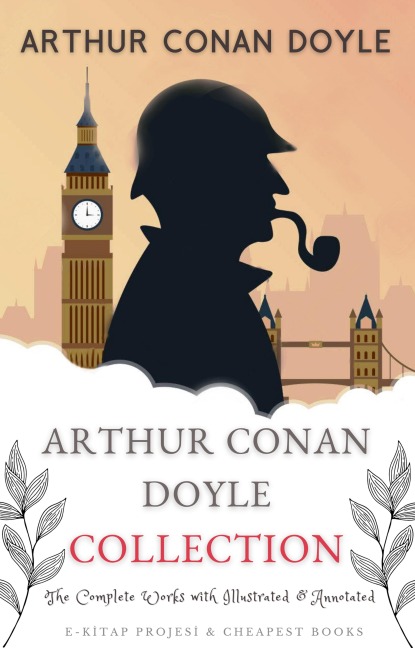
This Excellent Collection brings together Arthur Conan Doyle's longer, major books and a fine selection of shorter pieces and Fiction Books. These Books created and collected in Conan Doyle's Most important Works illuminate the life and work of one of the most individual writers of the XX century - a man who elevated political writing to an art. Sir Arthur Ignatius Conan Doyle (22 May 1859 - 7 July 1930) was a British writer and physician. He created the character Sherlock Holmes in 1887 for A Study in Scarlet, the first of four novels and fifty-six short stories about Holmes and Dr. Watson. The Sherlock Holmes stories are considered milestones in the field of crime fiction. Doyle was a prolific writer; other than Holmes stories, his works include fantasy and science fiction stories about Professor Challenger and humorous stories about the Napoleonic soldier Brigadier Gerard, as well as plays, romances, poetry, non-fiction and historical novels. One of Doyle's early short stories, "J. Habakuk Jephson's Statement" (1884), helped to popularise the mystery of the Mary Celeste. Author Arthur Conan Doyle wrote 60 mystery stories featuring the wildly popular detective character Sherlock Holmes and his loyal assistant Watson. This Collection included: 1.A Desert Drama 2.A Duet with an occasional chorus 3.A Study In Scarlet 4.A Visit to Three Fronts 5.Beyond the City 6.Danger! and Other Stories 7.His Last Bow 8.Micah Clarke 9.My Friend The Murderer 10.Rodney Stone 11.Round The Red Lamp 12.Sir Nigel 13.Songs of Action 14.Songs Of The Road 15.Tales of Terror and Mystery 16.The Adventure of the Bruce-Partington Plans 17.The Adventure of the Cardboard Box 18.The Adventure of the Devil's Foot 19.The Adventure of the Dying Detective 20.The Adventure of the Mazarin Stone 21.The Adventure of the Red Circle 22.The Adventure of Wisteria Lodge 23.The Adventures of Gerard 24.The Adventures of Sherlock Holmes 25.The Cabman's Story 26.The Captain of the Polestar 27.The Crime of the Congo 28.The Dealings of Captain Sharkey 29.The Disappearance of Lady Frances Carfax 30.The Doings of Raffles Haw 31.The Exploits of Brigadier Gerard 32.The Firm of Girdlestone 33.The Great Boer War 34.The Great Keinplatz Experiment 35.The Great Shadow and Other Napoleonic Tales 36.The Green Flag 37.The Hound of the Baskervilles 38.The Last Galley 39.The Last of the Legions and Other Tales 40.The Lost World 41.The Man from Archangel 42.The Memoirs of Sherlock Holmes 43.The Mystery of Cloomber 44.The New Revelation 45.The Parasite 46.The Poison Belt 47.The Problem of Thor Bridge 48.The Refugees 49.The Return of Sherlock Holmes 50.The Sign of the Four 51.The Stark Munro Letters 52.The Tragedy of The Korosko 53.The Valley of Fear 54.The Vital Message 55.The War in South Africa 56.The White Company 57.Through the Magic Door 58.Uncle Bernac 59.The Wanderings of a Spiritualist 60.The Guards Came Through and Other Poems 61.The Gully of Bluemansdyke 62.The Croxley Master: A Great Tale Of The Prize Ring
In 1890, Arthur Conan Doyle's novel, A Study in Scarlet introduced the character of Detective Sherlock Holmes. Doyle would go on to write 60 stories about Sherlock Holmes. He also strove to spread his Spiritualism faith through a series of books that were written from 1918 to 1926. Doyle died of a heart attack in Crowborough, England on July 7, 1930.On May 22, 1859, Arthur Conan Doyle was born to an affluent, strict Irish-Catholic family in Edinburgh, Scotland. Although Doyle's family was well-respected in the art world, his father, Charles, who was a life-long alcoholic, had few accomplishments to speak of. Doyle's mother, Mary, was a lively and well-educated woman who loved to read. She particularly delighted in telling her young son outlandish stories. Her great enthusiasm and animation while spinning wild tales sparked the child's imagination. As Doyle would later recall in his biography, "In my early childhood, as far as I can remember anything at all, the vivid stories she would tell me stand out so clearly that they obscure the real facts of my life."At the age of 9, Doyle bid a tearful goodbye to his parents and was shipped off to England, where he would attend Hodder Place, Stonyhurst a Jesuit preparatory school from 1868 to 1870. Doyle then went on to study at Stonyhurst College for the next five years. For Doyle, the boarding-school experience was brutal: many of his classmates bullied him, and the school practiced ruthless corporal punishment against its students. Over time, Doyle found solace in his flair for storytelling and developed an eager audience of younger students.