Und dann auf "Zum Home-Bildschirm [+]".

Stöbern
genialokal zum Startbildschirm hinzufügen
Installieren Sie die genialokal App auf Ihrem Startbildschirm für einen schnellen Zugriff und eine komfortable Nutzung.
Installieren Sie die genialokal App auf Ihrem Startbildschirm für einen schnellen Zugriff und eine komfortable Nutzung.
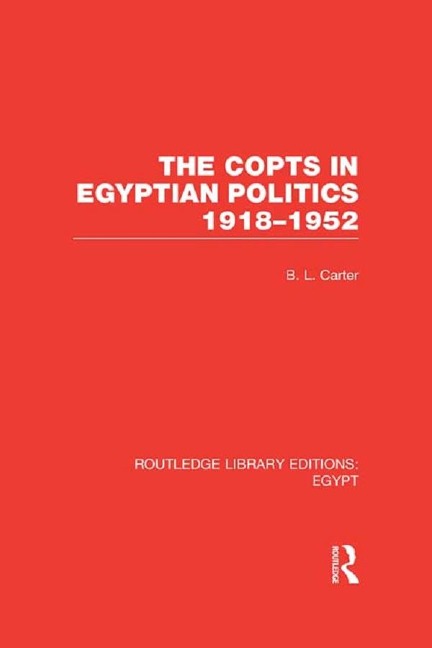
This book explores the political relationship between the Muslim majority and Coptic minority in Egypt between 1918 and 1952. Many Egyptians hoped to see the collaboration of the 1919 revolution spur the creation of both a new collective Egyptian identity and a state without religious bias. Traditional ways of governing, however, were not so easily cast aside. Some Egyptians held tenaciously to the traditional arrangements which had both guaranteed Muslim primacy and served relatively well to protect the Copts and afford them some autonomy. Differences within the Coptic community over the wisdom of trusting the genuineness and durability of Muslim support for equality were accentuated by a protracted struggle between reforming laymen and conservative clergy for control of the community. The unwillingness of all parties to compromise hampered the ability of the community both to determine and to defend its interests. The Copts met with modest success in their attempt to become full Egyptian citizens. Their influence in the Wafd, the pre-eminent political party, was very strong prior to and in the early years of the constitutional monarchy, and their formal representation was generally adequate and, in some parliaments, better than adequate. However, this very success produced a backlash which caused many Copts to believe, by the 1940s, that the experiment had failed: political activity has become fraught with risk for them. At the close of the monarchy, equality and shared power seemed motions as distant as in the disheartening years before the 1919 revolution.
B.L. Carter
Acknowledgements. Notes on Transliteration and Abbreviations. Introduction. 1. Communal Organisation 2. The British, the Copts, and the Nationalist Movement 3. The Limits of the Political Community and Egypt's National Identity 4. Representative Institutions 5. The Copts and Party Politics 6. The Copts and the State 7. Ethnicity and Religion in the Struggle for Power. Conclusion. Bibliography. Interviews.
Dieses eBook wird im PDF-Format geliefert und ist mit einem Adobe Kopierschutz (DRM) versehen. Sie können dieses eBook mit allen Geräten lesen, die das PDF-Format und den Adobe Kopierschutz (DRM) unterstützen.
Zum Beispiel mit den folgenden Geräten:
• tolino Reader
Laden Sie das eBook direkt über den Reader-Shop auf dem tolino herunter oder übertragen Sie das eBook auf Ihren tolino mit einer kostenlosen Software wie beispielsweise Adobe Digital Editions.
• Sony Reader & andere eBook Reader
Laden Sie das eBook direkt über den Reader-Shop herunter oder übertragen Sie das eBook mit der kostenlosen Software Sony READER FOR PC/Mac oder Adobe Digital Editions auf ein Standard-Lesegeräte mit epub- und Adobe DRM-Unterstützung.
• Tablets & Smartphones
Möchten Sie dieses eBook auf Ihrem Smartphone oder Tablet lesen, finden Sie hier unsere kostenlose Lese-App für iPhone/iPad und Android Smartphone/Tablets.
• PC & Mac
Lesen Sie das eBook direkt nach dem Herunterladen mit einer kostenlosen Lesesoftware, beispielsweise Adobe Digital Editions, Sony READER FOR PC/Mac oder direkt über Ihre eBook-Bibliothek in Ihrem Konto unter „Meine eBooks“ - „online lesen“.
Schalten Sie das eBook mit Ihrer persönlichen Adobe ID auf bis zu sechs Geräten gleichzeitig frei.
Bitte beachten Sie, dass die Kindle-Geräte das Format nicht unterstützen und dieses eBook somit nicht auf Kindle-Geräten lesbar ist.