Und dann auf "Zum Home-Bildschirm [+]".

Stöbern
genialokal zum Startbildschirm hinzufügen
Installieren Sie die genialokal App auf Ihrem Startbildschirm für einen schnellen Zugriff und eine komfortable Nutzung.
Installieren Sie die genialokal App auf Ihrem Startbildschirm für einen schnellen Zugriff und eine komfortable Nutzung.
Ihr gewünschter Artikel ist in 0 Buchhandlungen vorrätig - wählen Sie hier eine Buchhandlung in Ihrer Nähe aus:

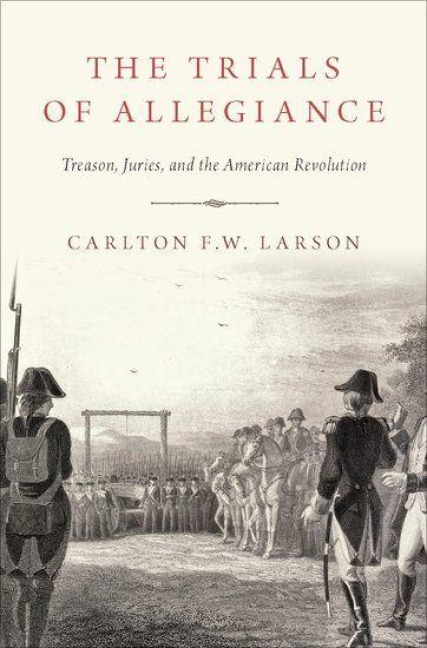
The Trials of Allegiance examines the law of treason during the American Revolution: a convulsive, violent civil war in which nearly everyone could be considered a traitor, either to Great Britain or to America. Drawing from extensive archival research in Pennsylvania, one of the main centers of the revolution, Carlton Larson provides the most comprehensive analysis yet of the treason prosecutions brought by Americans against British adherents: through committees of safety, military tribunals, and ordinary criminal trials. Although popular rhetoric against traitors was pervasive in Pennsylvania, jurors consistently viewed treason defendants not as incorrigibly evil, but as fellow Americans who had made a political mistake. This book explains the repeated and violently controversial pattern of acquittals. Juries were carefully selected in ways that benefited the defendants, and jurors refused to accept the death penalty as an appropriate punishment for treason. The American Revolution, unlike many others, would not be enforced with the gallows. More broadly, Larson explores how the Revolution's treason trials shaped American national identity and perceptions of national allegiance. He concludes with the adoption of the Treason Clause of the United States Constitution, which was immediately put to use in the early 1790s in response to the Whiskey Rebellion and Fries's Rebellion. In taking a fresh look at these formative events, The Trials of Allegiance reframes how we think about treason in American history, up to and including the present.
Carlton F.W. Larson is Professor of Law at the University of California, Davis School of Law.
- Acknowledgments - Introduction - 1. Treason in Colonial Pennsylvania - The Adoption of English Treason Law - Pennsylvania's Earliest Treason Cases - The Outbreak of War - The Disputes with Virginia and Connecticut - 2. Resistance and Treason, 1765-1775 - Justifying Resistance - A Jury of One's Peers - Identifying the Real Traitors - 3. Treason Against America, 1775-1776 - The War's First Treason Charges - The Second Round of Treason Charges - County Committees of Safety - Denunciation of Enemies - The British Legal Response to the Rebels - Independence - 4. From Independence to Invasion, 1776-1778 - The Pennsylvania Constitutional Convention and the Treason Ordinance - The Council of Safety and the County Committees - Enactment of a Treason Statute - The Case of James Molesworth and the Scope of Military Jurisdiction - The Test Act - Re-Opening the Courts - The Exiles to Virginia - The Fall of Philadelphia and Military Trials - 5. The Winding Path to the Courthouse, 1778 - Prosecutions in the County Courts - The Attainder Statute and Property Forfeitures - Chief Justice Thomas McKean and the Re-Opening of the Pennsylvania Supreme Court - The Special Commission for Bedford County - The Return to Philadelphia - Hiring Prosecutors and Court Employees - The Chester County Treason Trials - 6. The Philadelphia Treason Trials, 1778-1779: Forming the Jury - The Grand Jurors - Trial Juror Selection: The Panel and Challenges - Trial Juror Demographics - Trial Juror Political Activity - 7. The Philadelphia Treason Trials, 1778-1779: Trial and Deliberation - Defendant Demographics and Political Activity - Defense Counsel - Charges and Defenses - Trial Witnesses - Evidentiary Objections - Jury Deliberations - The Death Penalty - 8. Resentment and Betrayal, 1779-1781 - The Newspaper Debates over the Franks Trial - The Trial of Samuel Rowland Fisher - Fort Wilson - Modifications to Pennsylvania's Treason Law - The Battle Over Detentions - Misprision of Treason Cases before the Justices of the Pennsylvania Supreme Court - Benedict Arnold - The Aftermath: The Executions of David Dawson and Ralph Morden - The Berks County Tax Revolt - The Trials of Justin McCarty and Samuel Chapman - 9. Peace, the Constitution, and Rebellion, 1781-1800 - Treason Prosecutions after Yorktown - Treason Cases: Summary Data - The Escaping Prisoners Cases - The Returning Loyalists - The Continuing Threat of Internal Dismemberment - Treason and the United States Constitution - The Status of State Treason Law - The Whiskey Rebellion - Fries's Rebellion - Conclusion - Appendices - Notes - Index