Und dann auf "Zum Home-Bildschirm [+]".

Stöbern
genialokal zum Startbildschirm hinzufügen
Installieren Sie die genialokal App auf Ihrem Startbildschirm für einen schnellen Zugriff und eine komfortable Nutzung.
Installieren Sie die genialokal App auf Ihrem Startbildschirm für einen schnellen Zugriff und eine komfortable Nutzung.
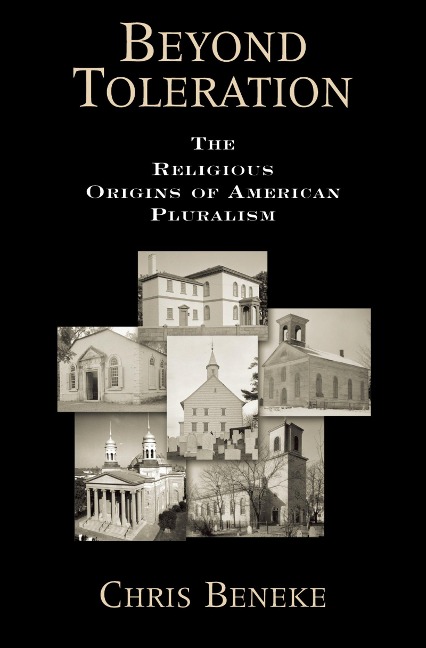
At its founding, the United States was one of the most religiously diverse places in the world. Baptists, Methodists, Catholics, Episcopalians, Presbyterians, Congregationalists, Quakers, Dutch Reformed, German Reformed, Lutherans, Huguenots, Dunkers, Jews, Moravians, and Mennonites populated the nations towns and villages. Dozens of new denominations would emerge over the succeeding years. What allowed people of so many different faiths to forge a nation together? In this richly told story of ideas, Chris Beneke demonstrates how the United States managed to overcome the religious violence and bigotry that characterized much of early modern Europe and America. The key, Beneke argues, did not lie solely in the protection of religious freedom. Instead, he reveals how American culture was transformed to accommodate the religious differences within it. The expansion of individual rights, the mixing of believers and churches in the same institutions, and the introduction of more civility into public life all played an instrumental role in creating the religious pluralism for which the United States has become renowned. These changes also established important precedents for future civil rights movements in which dignity, as much as equality, would be at stake. Beyond Toleration is the first book to offer a systematic explanation of how early Americans learned to live with differences in matters of the highest importance to them --and how they found a way to articulate these differences civilly. Today when religious conflicts once again pose a grave danger to democratic experiments across the globe, Beneke's book serves as a timely reminder of how one country moved past toleration and towards religious pluralism.
Chris Beneke is Assistant Professor of History at Bentley College in Waltham, MA. He received his Bachelors degree from Cornell University and his PhD from Northwestern University.
Dieses eBook wird im PDF-Format geliefert und ist mit einem Adobe Kopierschutz (DRM) versehen. Sie können dieses eBook mit allen Geräten lesen, die das PDF-Format und den Adobe Kopierschutz (DRM) unterstützen.
Zum Beispiel mit den folgenden Geräten:
• tolino Reader
Laden Sie das eBook direkt über den Reader-Shop auf dem tolino herunter oder übertragen Sie das eBook auf Ihren tolino mit einer kostenlosen Software wie beispielsweise Adobe Digital Editions.
• Sony Reader & andere eBook Reader
Laden Sie das eBook direkt über den Reader-Shop herunter oder übertragen Sie das eBook mit der kostenlosen Software Sony READER FOR PC/Mac oder Adobe Digital Editions auf ein Standard-Lesegeräte mit epub- und Adobe DRM-Unterstützung.
• Tablets & Smartphones
Möchten Sie dieses eBook auf Ihrem Smartphone oder Tablet lesen, finden Sie hier unsere kostenlose Lese-App für iPhone/iPad und Android Smartphone/Tablets.
• PC & Mac
Lesen Sie das eBook direkt nach dem Herunterladen mit einer kostenlosen Lesesoftware, beispielsweise Adobe Digital Editions, Sony READER FOR PC/Mac oder direkt über Ihre eBook-Bibliothek in Ihrem Konto unter „Meine eBooks“ - „online lesen“.
Schalten Sie das eBook mit Ihrer persönlichen Adobe ID auf bis zu sechs Geräten gleichzeitig frei.
Bitte beachten Sie, dass die Kindle-Geräte das Format nicht unterstützen und dieses eBook somit nicht auf Kindle-Geräten lesbar ist.