Und dann auf "Zum Home-Bildschirm [+]".

Stöbern
genialokal zum Startbildschirm hinzufügen
Installieren Sie die genialokal App auf Ihrem Startbildschirm für einen schnellen Zugriff und eine komfortable Nutzung.
Installieren Sie die genialokal App auf Ihrem Startbildschirm für einen schnellen Zugriff und eine komfortable Nutzung.
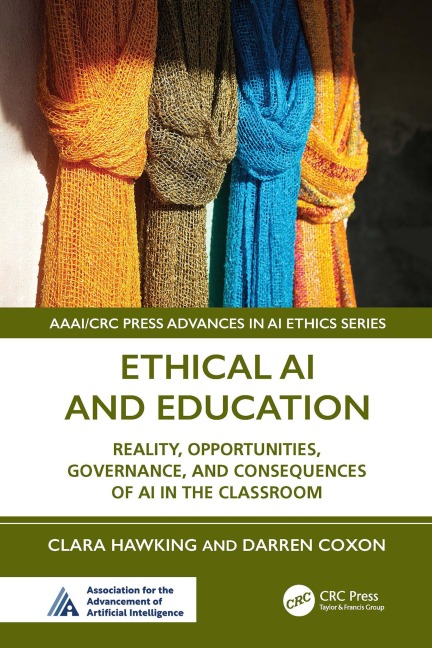
Ethical AI and Education: Reality, Opportunities, Governance, and Consequences of AI in the Classroom examines how artificial intelligence (AI) is entering schools and what responsible use requires from educators, leaders, and policymakers. It moves beyond claims of inevitable transformation to ask how decisions about AI are made, who holds responsibility, and what is at stake when educational judgment is shaped by automated systems. The book develops a governance-based approach to AI in education, grounded in ethics, law, and institutional practice. It addresses core issues including bias, datafication, academic integrity, teacher agency, and global inequality, while placing recent developments such as generative AI within a longer trajectory of educational technology. Drawing on international frameworks, including the European Union Artificial Intelligence Act, it provides practical guidance for schools seeking to implement AI in ways that are lawful, accountable, and educationally meaningful. The central argument is that ethical AI in education depends not on tools alone, but on structures of oversight, professional judgment, and institutional responsibility. For researchers, educators, and policymakers seeking to understand not only how AI is entering education, but how it should be governed, this book provides both analysis and direction.
Clara Hawking is an AI governance leader and ethicist. With a background in computer science and a specialisation in AI ethics, she works with schools, governments, and international organisations to support the responsible and effective integration of AI into learning environments. Clara has led large-scale AI governance initiatives across international school groups and has trained thousands of educators and leaders on ethical and lawful AI use. She is a contributing advisor on AI in education to global institutions and a frequent speaker on AI policy, governance, and the future of education. Her work focuses on aligning technological innovation with educational purpose, safeguarding, and institutional responsibility. Darren Coxon is an education leader, researcher, and writer with extensive experience in digital strategy, educational technology, and institutional development. His work focuses on the intersection of pedagogy, technology, and system-level change in schools. Darren has held senior leadership roles in international education and has contributed to research and practice in areas including digital transformation, curriculum innovation, and the impact of emerging technologies on teaching and learning. His writing explores the practical and philosophical implications of technology in education, with a particular focus on how schools can respond thoughtfully to rapid technological change.
Preface Acknowledgements About the Authors Chapter 1. Introduction: Setting the Stage for Ethical AI in Education Chapter 2. A Brief History of Digitising Education: Promises and Pitfalls Chapter 3. The COVID-19 Effect: Opportunities and Unintended Consequences Chapter 4. Hype vs. Reality: AI EdTech Enters the Scene Chapter 5. AI Ethics in Practice: Building a Human-Centred Classroom Chapter 6. AI Governance Frameworks for Schools Chapter 7. Regulatory Landscape: Privacy Laws, EU AI Act, COPPA, and Beyond Chapter 8. Human Rights as a Foundation: Equitable and Inclusive AI Chapter 9. Vision for 2030: Preparing for the Classrooms of the Future Chapter 10. Conclusion: Keeping It Real-Moving Forward Appendices Index