Und dann auf "Zum Home-Bildschirm [+]".

Stöbern
genialokal zum Startbildschirm hinzufügen
Installieren Sie die genialokal App auf Ihrem Startbildschirm für einen schnellen Zugriff und eine komfortable Nutzung.
Installieren Sie die genialokal App auf Ihrem Startbildschirm für einen schnellen Zugriff und eine komfortable Nutzung.
Ihr gewünschter Artikel ist in 0 Buchhandlungen vorrätig - wählen Sie hier eine Buchhandlung in Ihrer Nähe aus:

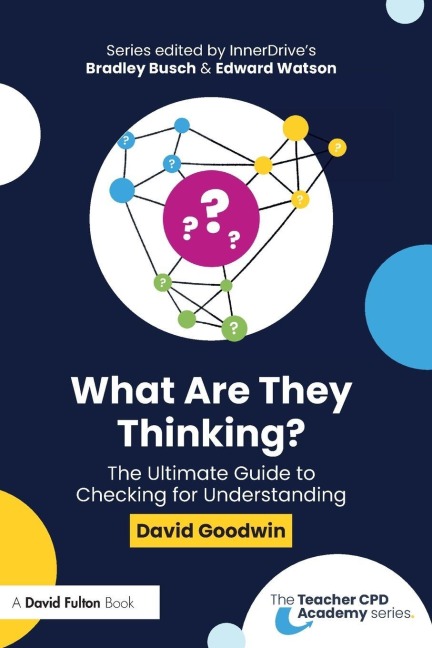
Teachers make decisions every lesson based on what they think students understand. However, without reliable ways to check understanding, teachers risk teaching to an illusion, and those most likely to be left behind are often the most vulnerable. What Are They Thinking? tackles one of the most consequential questions in teaching: how can we reliably find out what students actually understand, and use that insight to decide what to do next? The book explores the research behind checking for understanding and shows why it is central to so much of what we know about how learning happens. Drawing on evidence from cognitive science and formative assessment, it provides practical guidance to help teachers design checks that include every student, reveal misconceptions early, and allow teachers to respond thoughtfully to the evidence they provide. Examining checking for understanding across key areas of teaching and learning, the chapters cover: - Prior knowledge, including schema theory, meaning-making, and consolidation - The science of learning, including desirable difficulties, learning versus performance, and assessment - Practical classroom techniques, such as cold calling, mini whiteboards, hinge questions, and exit tickets applicable from early years education to post-16 and beyond; and - Applying checks for understanding in SEND, adaptive teaching and oracy Part of the Teacher CPD Academy series from InnerDrive, What Are They Thinking? is essential reading for teachers and school leaders who want to move beyond reassurance, make learning visible, and teach with greater precision, confidence, and impact. Checking for understanding is framed as a moral and professional imperative, making it more likely that teaching is guided by evidence rather than well-intentioned intuition.
David Goodwin is a trust-wide Teaching and Learning Lead in the East of England, working with colleagues across Early Years to Key Stage 4. He writes, speaks, and occasionally illustrates ideas about teaching and learning. He remains, first and foremost, a learner.
Introduction Section 1: Checking for Understanding and Prior Knowledge 1. Prior Knowledge and Schema Theory 2. Prior Knowledge and Meaning-making 3. Prior Knowledge and Consolidation Section 2: Checking for Understanding and the Science of Learning 4. The Illusion of Learning 5. Desirable Difficulties: The Paradoxical Nature of Learning 6. Assessment: The Bridge Between What is Taught and What is Learnt Section 3: Checking for Understanding in Action 7. Ratio: Involve All Students All of The Time 8. Cold Calling 9. Mini Whiteboards 10. Hinge Questions 11. Exit Tickets Section 4: Checking for Understanding and... 12. Checking for Understanding and SEND 13. Checking for Understanding and Adaptive Teaching 14. Checking for Understanding and the Early Years by Rachel Ashfield 15. Checking for Understanding and Oracy by Nikki Sullivan Closing Thoughts