Und dann auf "Zum Home-Bildschirm [+]".

Stöbern
genialokal zum Startbildschirm hinzufügen
Installieren Sie die genialokal App auf Ihrem Startbildschirm für einen schnellen Zugriff und eine komfortable Nutzung.
Installieren Sie die genialokal App auf Ihrem Startbildschirm für einen schnellen Zugriff und eine komfortable Nutzung.
Ihr gewünschter Artikel ist in 0 Buchhandlungen vorrätig - wählen Sie hier eine Buchhandlung in Ihrer Nähe aus:

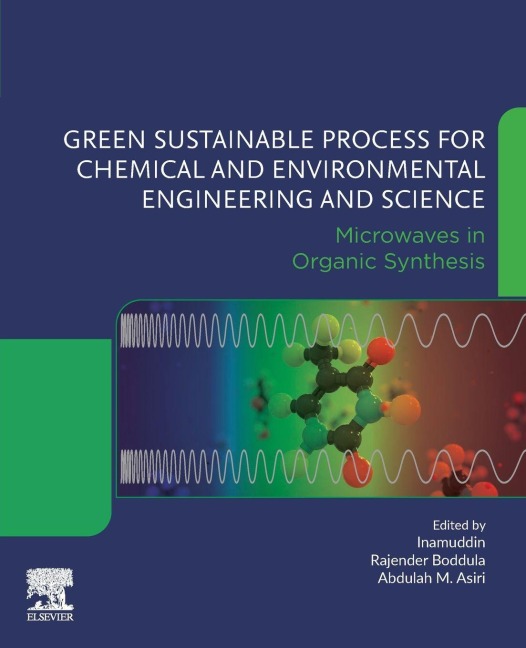
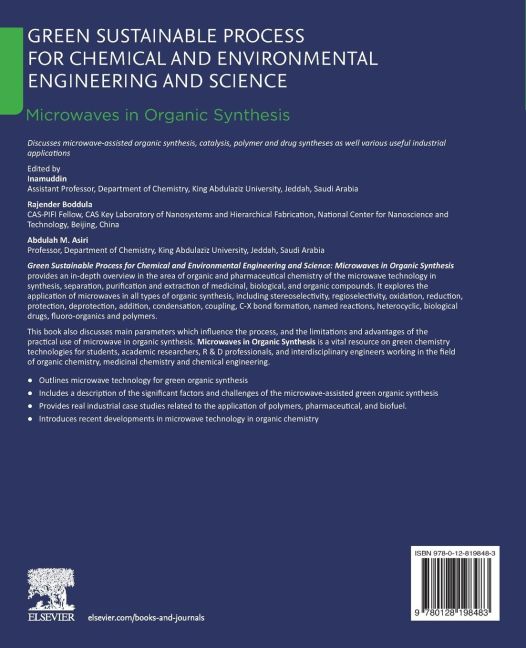
Microwaves in Organic Synthesis provides an in-depth overview in the area of organic and pharmaceutical chemistry of the microwave technology in separation, purification and extraction of medicinal, biological, and organic compounds.This book methodically explores the application of microwaves in all types of organic synthesis. It includes stereoselectivity, regioselectivity, oxidation, reduction, protection, deprotection, addition, condensation, coupling, C-X bond formation, named reactions, heterocyclic, biological drugs, fluoro-organics and polymers. After a brief introduction discusses the main parameters which influence the process, and the limitations and advantages of the practical use of microwave in organic synthesis. This book is a vital resource on green chemistry technologies for students and academic researchers, R& D professionals, students and university professors working in the field of organic chemistry, medicinal chemistry and chemical engineering.
Dr. Inamuddin is currently Assistant Professor in the Chemistry Department, Faculty of Science, King Abdulaziz University, Jeddah, Saudi Arabia, and is a permanent faculty member (Assistant Professor) at the Department of Applied Chemistry, Aligarh Muslim University, Aligarh, India. He has extensive research experience in multidisciplinary fields of Analytical Chemistry, Materials Chemistry, and Electrochemistry and, more specifically, Renewable Energy and Environment, and has worked on multiple key research projects funded by institutional and government agencies. Dr Inamuddin has published 146 research articles in international journals of repute, eighteen book chapters, and 54 books published by renowned international publishers. He is the member of various journal's editorial boards and serves as Associate Editor for a number of internationally renowned journals. In addition, he is also guest editing various special thematic special issues of journals for major publishing houses.
1. Introduction, activities and advantages of microwave-assisted organic synthesis2. Microwave-assisted oxidation reactions3. Microwave-assisted reduction reactions4. Microwave-assisted protection and deprotection reactions5. Microwave-assisted stereoselective organic synthesis6. Microwave-assisted stereospecific organic synthesis7. Microwave-assisted addition-type reactions 8. Microwave-assisted condensation reactions9. Microwave-assisted alkylation reactions10. Microwave-assisted phenolic compounds synthesis11. Microwave-assisted aqueous vs biphasic organic synthesis12. Microwave-assisted fluoroorganics13. Microwave-assisted heterocyclics14. Microwave-assisted biological-active organic synthesis15. Microwave-assisted catalyst-free organic synthesis16. Microwave-assisted for solvent-free organic synthesis17. Microwave catalysis in Organic synthesis18. Microwave-assisted multi-component reactions19. Microwave-assisted Grignard reactions20. Microwave-assisted supported reagents21. Microwave-assisted C-H activation reactions22. Microwave-assisted C-N formation reactions23. Microwave-assisted coupling reactions24. Microwave-assisted bio-fuel production25. Microwave-assisted polymer synthesis26. Microwave-assisted functionalized carbon synthesis27. State of the art and perspectives of Microwave-assisted organic synthesis