Und dann auf "Zum Home-Bildschirm [+]".

Stöbern
genialokal zum Startbildschirm hinzufügen
Installieren Sie die genialokal App auf Ihrem Startbildschirm für einen schnellen Zugriff und eine komfortable Nutzung.
Installieren Sie die genialokal App auf Ihrem Startbildschirm für einen schnellen Zugriff und eine komfortable Nutzung.
Ihr gewünschter Artikel ist in 0 Buchhandlungen vorrätig - wählen Sie hier eine Buchhandlung in Ihrer Nähe aus:
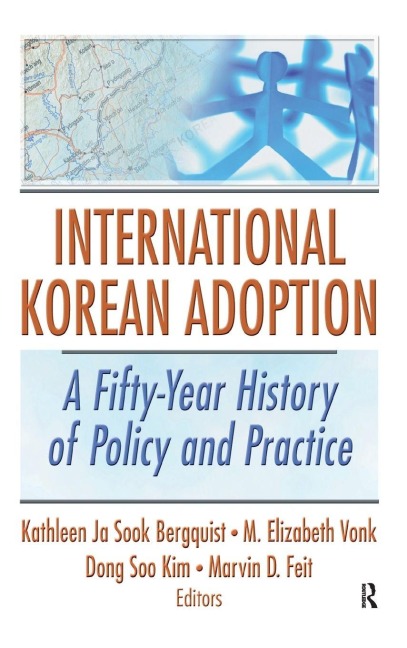
Discover the roots of international transracial adoption International Korean Adoption: A Fifty-Year History of Policy and Practice explores the long history of international transracial adoption. Scholars present the expert multidisciplinary perspectives and up-to-date research on this most significant and longstanding form of international child welfare practice. Viewpoints and research are discussed from the academic disciplines of psychology, ethnic studies, sociology, social work, and anthropology. The chapters examine sociohistorical background, the forming of new families, reflections on Korean adoption, birth country perspectives, global perspectives, implications for practice, and archival, historical, and current resources on Korean adoption. International Korean Adoption: A Fifty-Year History of Policy and Practice provides fresh insight into the origins, development, and institutionalization of Korean adoption. Through original research and personal accounts, this revealing text explores how Korean adoptees and their families fit into their family roles-and offers clear perspectives on adoption as child welfare practice. Global implications and politics, as well as the very personal experiences are examined in detail. This source is a one-of-a-kind look into the full spectrum of information pertaining to Korean adoption. Topics in International Korean Adoption: A Fifty-Year History of Policy and Practice include: - adoption from the Korean perspective - historical origins of Korean adoption in the United States - adjustments of young adult adoptees - marketing to choosy adopters - ethnic identity - perspectives on the importance of race and culture in parenting - birth mothers' perspectives - sociological approach to race and identity - representations of adoptees in Korean popular culture - adoption in Australia and the Netherlands - much, much more International Korean Adoption: A Fifty-Year History of Policy and Practice is illuminating reading for adoptees, adoptive parents, practitioners, educators, students, and any child welfare professional.
Dong Soo Kim, Kathleen Ja Sook Bergquist, M. Elizabeth Vonk, Marvin D. Feit
* About the Editors * Contributors * Foreword (Paull Shin) * Preface * PART I: SOCIOHISTORICAL BACKGROUND * Chapter 1. A Country Divided: Contextualizing Adoption from a Korean Perspective (Dong Soo Kim) * Historical and Cultural Background * Korean Conflict and Its Impact on Families * The Origin of Korean International Adoption * International Adoption As a Permanent Institution * Motivation for International Adoption * Globalization of Korean International Adoption * Questions and Issues * Recent Developments * Chapter 2. Institutionalizing International Adoption: The Historical Origins of Korean Adoption in the United States (Catherine Ceniza Choy) * A World Vision * From Rescue to Rivalry * Independent Adoption Schemes: An Uneven Legacy * PART II: FORMING NEW FAMILIES * Chapter 3. A Long-Term Follow-Up of Transracially Adopted Children in Their Young Adult Years (William Feigelman) * Methods * Results * Discussion * Chapter 4. Choosing Korea: Marketing Multiculturalism to Choosy Adopters (Kristi Brian) * The Trouble with Culture * Themes of the Dominant Institutional Discourse * Conclusion: Shifting the Practice Paradigm Toward a Problem-Oriented View of Adoption Culture * Chapter 5. Korean Adopted Children's Ethic Identity Formation (Nam Soon Huh) * Ethnic Identity * Ethnic Identity Development and Adoption * Methods * Results * Discussion * Implications for Practice * Chapter 6. Transracial Adoptive Parents' Thoughts About the Importance of Race and Culture in Parenting (M. Elizabeth Vonk, Sung Hyun Yun, Wansoo Park, and Richard R. Massatti) * Methodology * Results * Discussion * Implications * PART III: REFLECTIONS ON KOREAN ADOPTION * Chapter 7. Remembering Loss: The Koreanness of Overseas Adopted Koreans (Eleana Kim) * Introduction * Points of Reentry * The Global Family of Korea * Wedding Citizenship and Culture * Conclusion * Chapter 8. Mothers Without Mothering: Birth Mothers from South Korea Since the Korean War (Hosu Kim) * Trauma and the Figure of the Birth Mother * Intercountry Adoption and Korea * Three Cohorts of Birth Mothers' Characteristics in Korea * Affect Economy and the Figure of the Birth Mother * The Child As Gift or Adoption As Gift? * Activating the Memory of Birth Mothers * Chapter 9. A Sociological Approach to Race, Identity, and Asian Adoption (Jiannbin L. Shiao and Mia H. Tuan) * Introduction * The Asian Adoption Phenomenon * The Desirability of Asian Adoptees * Controversy Over Black-White Adoption Placements * Asian Adoption As an Area of Sociological Investigations * Research * Clues from the Asian Immigrants in White Families: Korean Adoptees in American Study * Conclusion: From Family Adjustment to Diverse Meaning and Contexts * Chapter 10. Lifting the Shroud of Silence: A Korean Adoptee's Search for Truth, Legitimacy, and Justice (Rebecca Hurdis) * Prologue * Christianity and the Korean War * Illegitimate Motherhood * Daughters of the Ghost * PART IV: BIRTH-COUNTRY PERSPECTIVES * Chapter 11. Recent Trends in Child Welfare and Adoption in Korea: Challenges and Future Directions (Bong Joo Lee) * Introduction * A Brief History of Adoption in Korea * Trends in Adoption * Challenges and Future Directions of Adoption in Korea * Conclusion * Chapter 12. Korea's Overseas Adoption and Its Positive Impact on Domestic Adoption and Child Welfare in Korea (Tai Soon Bai) * Introduction * Domestic Adoption Practice in Korea * Impact of International Adoption on the Development of Domestic Adoption and Child-Welfare Practices * Conclusion * Chapter 13. The Korean Adoption Issue and Representations of Adopted Koreans in Korean Popular Culture (Tobias Hübinette) * The Importance of