Und dann auf "Zum Home-Bildschirm [+]".

Stöbern
genialokal zum Startbildschirm hinzufügen
Installieren Sie die genialokal App auf Ihrem Startbildschirm für einen schnellen Zugriff und eine komfortable Nutzung.
Installieren Sie die genialokal App auf Ihrem Startbildschirm für einen schnellen Zugriff und eine komfortable Nutzung.
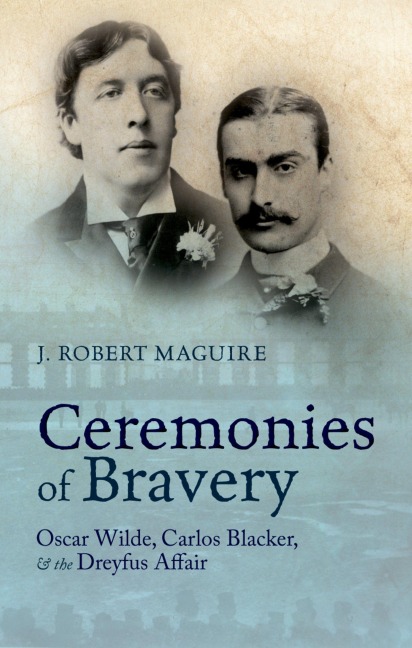
Ceremonies of Bravery is a study of the friendship between the prolific writer Oscar Wilde and Carlos Blacker. The two men met in the 1880s, the period when Wilde was judged by many to be 'at his best', and Blacker went on to become a trustee of Wilde's marriage settlement. Wilde declared Blacker 'the truest of friends and the most sympathetic of companions', and diaries and letters show that the men were close confidantes for almost two decades, a period during which both endured personal crises and disgrace. However, the relationship came to an abrupt end in June 1898. Carlos Blacker recorded prophetically in his diary, 'After lunch just before dinner letter from Oscar which put an end to our friendship forever'. Robert Maguire draws on Blacker's diaries to paint a rich portrait of Wilde's dear friend in their shared social milieu, providing an account that adds much to the already vivid picture of Wilde's life. He devotes the first half of the book to the formative years of the friendship, showing the two men attempting to support each other in disgrace, with personal crises unfolding in parallel in their lives. Maguire then turns his attention to the men's reunion in Paris in March 1898, some three years after Wilde's arrest. Here, the Dreyfus Affair was at its peak, and Wilde and Blacker found themselves with very different perspectives. Maguire weaves together court records, letters, and diaries to propose a new account of the way in which Dreyfusard Blacker, working on a secret plan to establish Dreyfus's innocence, drew his old friend Oscar Wilde into his confidence. Wilde, on the other hand, was developing increasing interest in and sympathy for the real traitor Esterhazy, and it is most likely that this led him to betray Blacker's confidence, ending the friendship between the two men. The obscurity surrounding Carlos Blacker's role in the Dreyfus affair, as well as the attendant circumstances of his painful breakup with Oscar Wilde, was mainly due to Blacker's own rigidly maintained silence to the time of his death in 1928. The full story did not come to light until the transcription beginning in 1989 of Blacker's diaries. Using these diaries, alongside other archival sources, Ceremonies of Bravery provides new insight into a special relationship while also offering a unique perspective on the Dreyfus Affair.
Robert Maguire entered Princeton in June 1942 and withdrew in March 1943 to join the American Army. After service in the Pacific, he returned to Princeton in March 1946, withdrawing in June to spend the summer in Paris working with the American Delegation to the Peace Conference. While there he developed what became a life-long interest in the Dreyfus affair. He again withdrew from Princeton in September 1947 to spend a year at Christ's College, Cambridge, returning to Princeton to graduate in September 1948. Following graduation, he spent the next two years in Germany as a member of the American Displaced Persons Commission. In September 1950, he entered Yale University Law School, graduating (LLB) in June 1953, followed by a JD (Juris Doctor) degree in 1987. In addition to employment in a New York law firm (White & Case) for ten years, Maguire's institutional affiliations have been mainly trusteeships and/or committee memberships with various museums aand libraries.
- Introduction - The Greatest Friendship of My Life - Sadness, Disappointment, Upset. and Weariness - The Girl With the Foghorn Voice - He Has Been Mad the Last 3 Years - Letters From Two Idiots to a Lunatic - The Most Bitter Experience of a Bitter Life - The Dreyfus-Case Paris Cannot Be Figured by the Paris of Today - Paradoxes Are Always Dangerous Things - No One Should Know Such an Infamous Person as Bosie - He Was a Great Genius. His Familiar Talk Was Golden - EPILOGUE - APPENDIX - Carlos Blacker s Private and Confidential Memorandum on the Dreyfus Affair - NOTES - BIBLIOGRAPHY
Dieses eBook wird im PDF-Format geliefert und ist mit einem Adobe Kopierschutz (DRM) versehen. Sie können dieses eBook mit allen Geräten lesen, die das PDF-Format und den Adobe Kopierschutz (DRM) unterstützen.
Zum Beispiel mit den folgenden Geräten:
• tolino Reader
Laden Sie das eBook direkt über den Reader-Shop auf dem tolino herunter oder übertragen Sie das eBook auf Ihren tolino mit einer kostenlosen Software wie beispielsweise Adobe Digital Editions.
• Sony Reader & andere eBook Reader
Laden Sie das eBook direkt über den Reader-Shop herunter oder übertragen Sie das eBook mit der kostenlosen Software Sony READER FOR PC/Mac oder Adobe Digital Editions auf ein Standard-Lesegeräte mit epub- und Adobe DRM-Unterstützung.
• Tablets & Smartphones
Möchten Sie dieses eBook auf Ihrem Smartphone oder Tablet lesen, finden Sie hier unsere kostenlose Lese-App für iPhone/iPad und Android Smartphone/Tablets.
• PC & Mac
Lesen Sie das eBook direkt nach dem Herunterladen mit einer kostenlosen Lesesoftware, beispielsweise Adobe Digital Editions, Sony READER FOR PC/Mac oder direkt über Ihre eBook-Bibliothek in Ihrem Konto unter „Meine eBooks“ - „online lesen“.
Schalten Sie das eBook mit Ihrer persönlichen Adobe ID auf bis zu sechs Geräten gleichzeitig frei.
Bitte beachten Sie, dass die Kindle-Geräte das Format nicht unterstützen und dieses eBook somit nicht auf Kindle-Geräten lesbar ist.