Und dann auf "Zum Home-Bildschirm [+]".

Stöbern
genialokal zum Startbildschirm hinzufügen
Installieren Sie die genialokal App auf Ihrem Startbildschirm für einen schnellen Zugriff und eine komfortable Nutzung.
Installieren Sie die genialokal App auf Ihrem Startbildschirm für einen schnellen Zugriff und eine komfortable Nutzung.
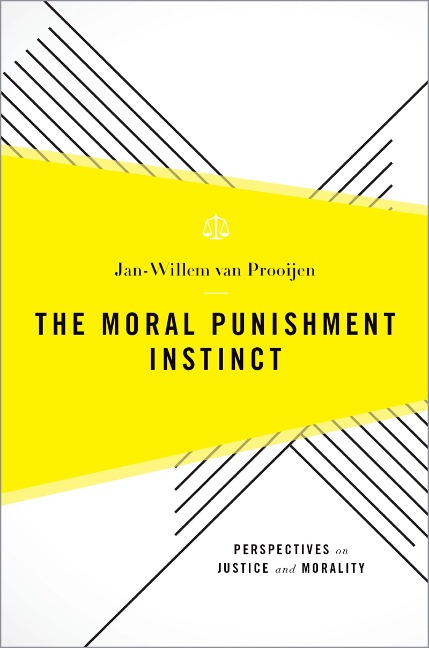
Punishment of offenders is one of the most universal features of human behavior. Across time and cultures it has been common for people to punish offenders, and one can easily find examples of punishment among ancient hunter-gatherers, in holy scriptures, in popular culture, and in contemporary courts of law. Punishment is not restricted to criminal offenders, but emerges within all spheres of our social life, including corporations, public institutions, traffic, sports matches, schools, parenting, and more. Punishment strongly influences what we think, how we feel, and what we do. The Moral Punishment Instinct asserts that people possess a hard-wired tendency to aggress against those who violate the norms of their group. We have evolved this instinct because of its power to control behavior by curbing selfishness and free-riding, thereby providing incentives to stimulate the mutual cooperation that ancient hunter-gatherers needed in order to survive in challenging natural environments. In this book, Jan-Willem van Prooijen methodically describes how punishment originates from moral emotions, stimulates cooperation, and shapes the social life of human beings. Guided by a host of recognizable and relatable examples, this book illuminates how the moral punishment instinct manifests itself among a variety of modern human cultures, children, tribes of hunter-gatherers, and even non-human animals-all while accounting for the role of this instinct in religion, war, racial bias, restorative justice, gossip, torture, and radical terrorism.
Jan-Willem van Prooijen is Associate Professor at the Department of Experimental and Applied Psychology of VU University Amsterdam, and a Senior Researcher at the Netherlands Institute for the Study of Crime and Law Enforcement (NSCR).
Preface
Chapter 1 Introduction
Chapter 2 Motives for Punishment
Chapter 3 Reason or Intuition?
Chapter 4 Origins of the Moral Punishment Instinct
Chapter 5 Punishment and Cooperation
Chapter 6 When Punishment Backfires
Chapter 7 Black Sheeps versus Ingroup Favoritism
Chapter 8 Punishing Dangerous Outsiders
Chapter 9 Revenge, Gossip, and Restorative Justice
Chapter 10 Conclusions and Implications
Notes
References
Index
Dieses eBook wird im PDF-Format geliefert und ist mit einem Adobe Kopierschutz (DRM) versehen. Sie können dieses eBook mit allen Geräten lesen, die das PDF-Format und den Adobe Kopierschutz (DRM) unterstützen.
Zum Beispiel mit den folgenden Geräten:
• tolino Reader
Laden Sie das eBook direkt über den Reader-Shop auf dem tolino herunter oder übertragen Sie das eBook auf Ihren tolino mit einer kostenlosen Software wie beispielsweise Adobe Digital Editions.
• Sony Reader & andere eBook Reader
Laden Sie das eBook direkt über den Reader-Shop herunter oder übertragen Sie das eBook mit der kostenlosen Software Sony READER FOR PC/Mac oder Adobe Digital Editions auf ein Standard-Lesegeräte mit epub- und Adobe DRM-Unterstützung.
• Tablets & Smartphones
Möchten Sie dieses eBook auf Ihrem Smartphone oder Tablet lesen, finden Sie hier unsere kostenlose Lese-App für iPhone/iPad und Android Smartphone/Tablets.
• PC & Mac
Lesen Sie das eBook direkt nach dem Herunterladen mit einer kostenlosen Lesesoftware, beispielsweise Adobe Digital Editions, Sony READER FOR PC/Mac oder direkt über Ihre eBook-Bibliothek in Ihrem Konto unter „Meine eBooks“ - „online lesen“.
Schalten Sie das eBook mit Ihrer persönlichen Adobe ID auf bis zu sechs Geräten gleichzeitig frei.
Bitte beachten Sie, dass die Kindle-Geräte das Format nicht unterstützen und dieses eBook somit nicht auf Kindle-Geräten lesbar ist.