Stöbern
genialokal zum Startbildschirm hinzufügen
Installieren Sie die genialokal App auf Ihrem Startbildschirm für einen schnellen Zugriff und eine komfortable Nutzung.
Installieren Sie die genialokal App auf Ihrem Startbildschirm für einen schnellen Zugriff und eine komfortable Nutzung.
Tippen Sie einfach auf Teilen:
 Und dann auf "Zum Home-Bildschirm [+]".
Ihr gewünschter Artikel ist in 0 Buchhandlungen vorrätig - wählen Sie hier eine Buchhandlung in Ihrer Nähe aus:

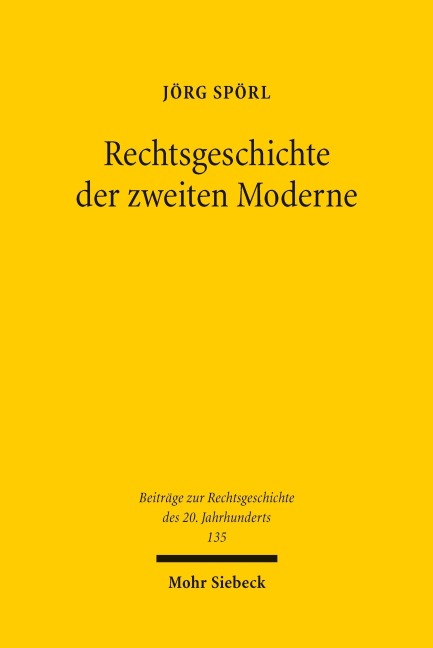
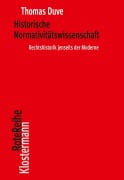
Some of the most fascinating and still influential narratives of German legal history emerged under the paradigm of intellectual history. Drawing on linguistic models, Jörg Spörl develops for the first time an analytical framework for legal-historical narratives that enables a comparative perspective on these texts and their wide range of facets.
At the center of the analysis is Erik Wolf's first major intellectual-historical narrative, Große Rechtsdenker . The work is comprehensively reconstructed from contemporary reference discourses, which shed light on the choice of historical style. These perspectives converge in the aporias of a legal history of the second modernity, which unfolds its narrative along characteristic topoi of legal-theoretical discourse.
In doing so, the study fills a gap in research on the legal scholar Erik Wolf. At the same time, it opens up new perspectives on questions of continuity and rupture in German legal scholarship in the first half of the twentieth century. Finally, it enables a deeper understanding of the art of legal-historical narration and offers insight into the rich forms of intellectual-historical legal history.
Geboren 1987; 2014 Erstes Juristisches Staatsexamen; Wissenschaftlicher Mitarbeiter an der Universität zu Köln; 2020 Zweites Juristisches Staatsexamen und Richter auf Probe am Landgericht Offenburg; Referent für Bankenrestrukturierung, Bankenregulierung sowie Versicherungs- und Pensionsfondsaufsicht am Bundesministerium der Finanzen.
Einleitung
Erster Teil: Elemente und Strukturen der Großen Rechtsdenker
I. Methode: Wonach sucht man im rechtshistorischen Paradigma? - II. Der historische Stil der Rechtsdenkererzählung - III. Zusammenfassung
Zweiter Teil: Linien
I. Werk des Widerstands oder Legitimation des Nationalsozialismus? Eine politische Verortung - II. Das historische Feld und eine pädagogische Literaturgeschichte - III. Der dramatisch-organizistische Einfluss der Soziologie - IV. Eine philosophische Lesart der Rechtsdenkererzählung? - V. Rechtswissenschaft der zweiten Moderne
Gesamtergebnis