Stöbern
genialokal zum Startbildschirm hinzufügen
Installieren Sie die genialokal App auf Ihrem Startbildschirm für einen schnellen Zugriff und eine komfortable Nutzung.
Installieren Sie die genialokal App auf Ihrem Startbildschirm für einen schnellen Zugriff und eine komfortable Nutzung.
Tippen Sie einfach auf Teilen:
 Und dann auf "Zum Home-Bildschirm [+]".
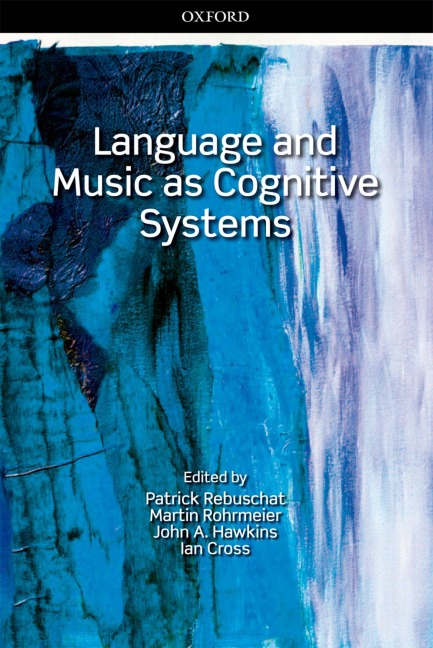
The past 15 years have witnessed an increasing interest in the comparative study of language and music as cognitive systems. Language and music are uniquely human traits, so it is not surprising that this interest spans practically all branches of cognitive science, including psychology, computer science, linguistics, cognitive neuroscience, and education. Underlying the study of language and music is the assumption that the comparison of these two domains can shed light on the structural and functional properties of each, while also serving as a test case for theories of how the mind and, ultimately, the brain work.
This book presents an interdisciplinary study of language and music, bringing together a team of leading specialists across these fields. The volume is structured around four core areas in which the study of music and language has been particularly fruitful: (i) structural comparisons, (ii) evolution, (iii) learning and processing, and (iv) neuroscience. As such it provides a snapshot of the different research strands that have focused on language and music, identifying current trends and methodologies that have been (or could be) applied to the study of both domains, and outlining future research directions. This volume is valuable in promoting the investigation of language and music by fostering interdisciplinary discussion and collaboration.
With an ever increasing interest in both music cognition and language, this book will be valuable for students and researchers of psychology, linguistics, neuroscience, and musicology.
Patrick Rebuschat is a Lecturer in Lecturer in Bilingualism and Cognitive Linguistics at Bangor University in Wales. He obtained a PhD in English & Applied Linguistics from the University of Cambridge in 2008. His research focuses on the cognitive aspects underlying second language acquisition and processing. He is the editor of a forthcoming volume on Statistical Learning and Language Acquisition (with John Williams, de Gruyter).
- 1: Editors' General Introduction to the Volume - Structural Comparisons - 2: Editors' introduction to section - 3: Morris Halle and Nigel Fabb: Target article 1 - 4: Laura Dilley and Devin McAuley: Commentary - 5: Brechtje Post: Commentary - 6: Bert Vaux: Commentary - 7: Ian Roberts: Commentary - 8: Morris Halle and Nigel Fabb: Reply to comments - Evolution - 9: Editors' introduction to section - 10: W. Tecumseh Fitch: Target Article 2 - 11: Simon Kirby: Commentary - 12: Steven Mithen: Commentary - 13: Iain Morley: Commentary - 14: Elizabeth Tolbert: Commentary - 15: W. Tecumseh Fitch: Reply to comments - Learning and Processing - 16: Editors' introduction to section - 17: Jamshed Bharucha, Meagan Curtis, and Kaivon Paroo: Target Article 3 - 18: Zoltán Dienes, Catherine Jones, Gustav Kuhn, and Guo Xiuyan: Commentary - 19: Geraint Wiggins: Commentary - 20: John Willams: Commentary - 21: Jamshed Bharucha: Reply to comments - Neuroscience - 22: Editors' introduction to section - 23: Aniruddh Patel: Target Article 4 - 24: Stefan Koelsch: Commentary - 25: Jessican Grahn: Commentary - 26: Justin London: Commentary - 27: Aniruddh Patel: Reply to comments - 28: Isabelle Peretz: Target Article 5 - 29: Erika Skoe and Nina Kraus: Commentary - 30: Mireille Besson and Daniele Schön: Commentary - 31: Usha Goswami: Commentary - 32: Leigh VanHandel, Jennie L. Wakefield, and Wendy Wilkins: Commentary - 33: Isabelle Peretz: Reply to comments - Conclusion - 34: Ian Cross: Conclusion
Dieses eBook wird im PDF-Format geliefert und ist mit einem Adobe Kopierschutz (DRM) versehen. Sie können dieses eBook mit allen Geräten lesen, die das PDF-Format und den Adobe Kopierschutz (DRM) unterstützen.
Zum Beispiel mit den folgenden Geräten:
• tolino Reader
Laden Sie das eBook direkt über den Reader-Shop auf dem tolino herunter oder übertragen Sie das eBook auf Ihren tolino mit einer kostenlosen Software wie beispielsweise Adobe Digital Editions.
• Sony Reader & andere eBook Reader
Laden Sie das eBook direkt über den Reader-Shop herunter oder übertragen Sie das eBook mit der kostenlosen Software Sony READER FOR PC/Mac oder Adobe Digital Editions auf ein Standard-Lesegeräte mit epub- und Adobe DRM-Unterstützung.
• Tablets & Smartphones
Möchten Sie dieses eBook auf Ihrem Smartphone oder Tablet lesen, finden Sie hier unsere kostenlose Lese-App für iPhone/iPad und Android Smartphone/Tablets.
• PC & Mac
Lesen Sie das eBook direkt nach dem Herunterladen mit einer kostenlosen Lesesoftware, beispielsweise Adobe Digital Editions, Sony READER FOR PC/Mac oder direkt über Ihre eBook-Bibliothek in Ihrem Konto unter „Meine eBooks“ - „online lesen“.
Schalten Sie das eBook mit Ihrer persönlichen Adobe ID auf bis zu sechs Geräten gleichzeitig frei.
Bitte beachten Sie, dass die Kindle-Geräte das Format nicht unterstützen und dieses eBook somit nicht auf Kindle-Geräten lesbar ist.