Und dann auf "Zum Home-Bildschirm [+]".

Stöbern
genialokal zum Startbildschirm hinzufügen
Installieren Sie die genialokal App auf Ihrem Startbildschirm für einen schnellen Zugriff und eine komfortable Nutzung.
Installieren Sie die genialokal App auf Ihrem Startbildschirm für einen schnellen Zugriff und eine komfortable Nutzung.
Ihr gewünschter Artikel ist in 0 Buchhandlungen vorrätig - wählen Sie hier eine Buchhandlung in Ihrer Nähe aus:

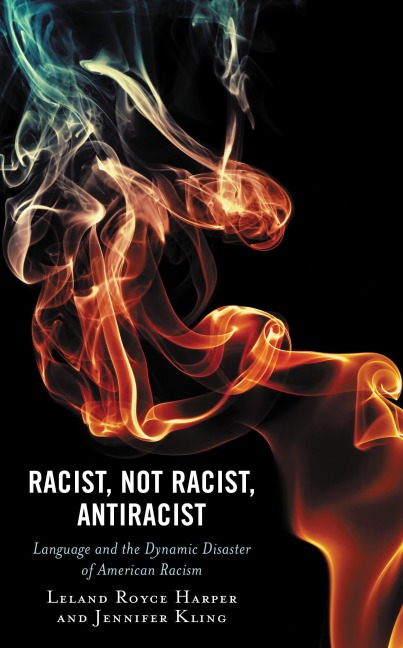
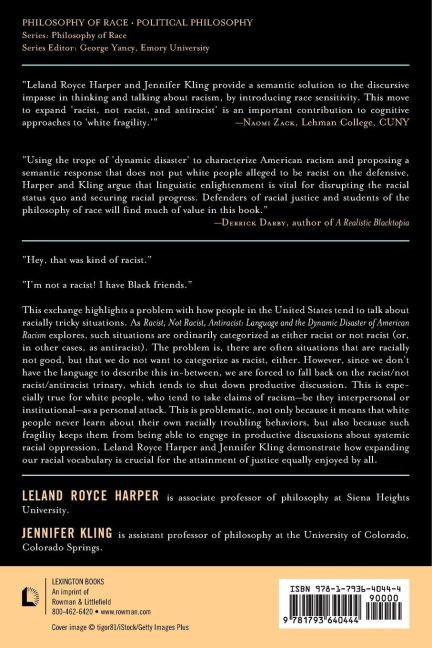
"Hey, that was kind of racist." "I'm not a racist! I have Black friends." This exchange highlights a problem with how people in the United States tend to talk about racially tricky situations. As Racist, Not Racist, Antiracist: Language and the Dynamic Disaster of American Racism explores, such situations are ordinarily categorized as either racist or not racist (or, in other cases, as antiracist). The problem is, there are often situations that are racially not good, but that we do not want to categorize as racist, either. However, since we don't have the language to describe this in-between, we are forced to fall back on the racist/not racist/antiracist trinary, which tends to shut down productive discussion. This is especially true for white people, who tend to take claims of racism-be they interpersonal or institutional-as a personal attack. This is problematic, not only because it means that white people never learn about their own racially troubling behaviors, but also because such fragility keeps them from being able to engage in productive discussions about systemic racial oppression. Leland Harper and Jennifer Kling demonstrate how expanding our racial vocabulary is crucial for the attainment of justice equally enjoyed by all.
Leland Harper is a Canadian philosopher who has held academic appointments at Siena Heights University, USA, and Kwantlen Polytechnic University, Canada. He is the author of Multiverse Deism: Shifting Perspectives of God and the World (Lexington Books, 2020) and co-author of Racist, Not Racist, Antiracist: Language and the Dynamic Disaster of American Racism (Lexington Books, 2022). He is the founder and lead consultant of Leland Harper Consulting, a Canadian consulting firm that supports organizations in moving beyond symbolic diversity, equity, and inclusion (DEI) commitments toward sustainable policies, governance structures, professional development programs, and leadership practices.
Preface Acknowledgments Land Acknowledgment Chapter 1: The Dynamic Disaster of Racism Chapter 2: The Semantic Foundations of White Fragility and the Consequences for Justice Chapter 3: COVID-19 in Black America Chapter 4: Shifting Toward Democracy and Justice Chapter 5: Furthering the Claim Chapter 6: Conversations Chapter 7: The Expansion