Stöbern
genialokal zum Startbildschirm hinzufügen
Installieren Sie die genialokal App auf Ihrem Startbildschirm für einen schnellen Zugriff und eine komfortable Nutzung.
Installieren Sie die genialokal App auf Ihrem Startbildschirm für einen schnellen Zugriff und eine komfortable Nutzung.
Tippen Sie einfach auf Teilen:
 Und dann auf "Zum Home-Bildschirm [+]".
Ihr gewünschter Artikel ist in 0 Buchhandlungen vorrätig - wählen Sie hier eine Buchhandlung in Ihrer Nähe aus:

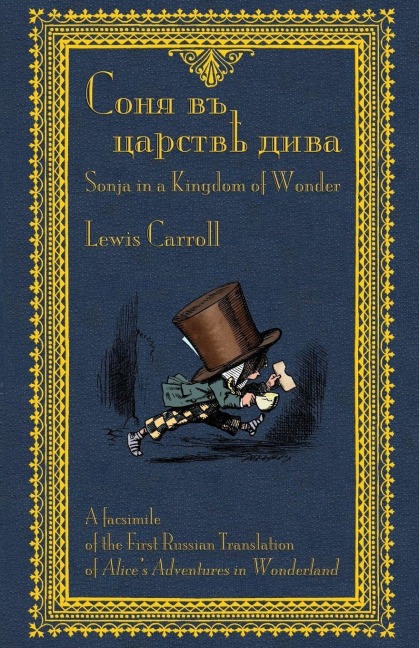
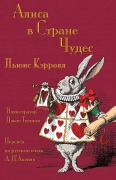
The first Russian translation of "Alice's Adventures in Wonderland" appeared in Moscow in 1879, fourteen years after the publication of original. It bore the title "Sonja in a Kingdom of Wonder" and was printed by Mamonov's Press. The text was printed in Old Russian orthography, using the old letters (that is, -, -, - after consonant endings, etc.) that were annihilated or changed for the present ones early in the twentieth century. No name of the author, illustrator, or translator appeared on the title page, and the identity of the translator is to this day a matter of speculation. There are now many Russian translations of "Alice", but "Sonja" is the first, and the only one done within Carroll's lifetime, presumably with his knowledge, and thereby must be accorded a place of honour in the canon. This book has been published in two editions: a limited hardcover black-and-white facsimile printed for the Lewis Carroll Society of North America, and this paperback colour facsimile, part of Evertype's ever-growing set of translations of the "Alice" books.
A Tangled Tale is a collection of 10 brief humorous stories by Lewis Carroll (Charles Lutwidge Dodgson), published serially between April 1880 and March 1885 in The Monthly Packet magazine. Arthur B. Frost added illustrations when the series was printed in book form. The stories, or Knots as Carroll calls them, present mathematical problems. In a later issue, Carroll gives the solution to a Knot and discusses readers' answers. The mathematical interpretations of the Knots are not always straightforward. The ribbing of readers answering wrongly - giving their names - was not always well received (see Knot VI below). In the December 1885 book preface Carroll writes: The writer's intention was to embody in each Knot (like medicine so dexterously, but ineffectually, concealed in the jam of our early childhood) one or more mathematical questions - in Arithmetic, Algebra, or Geometry, as the case might be - for the amusement, and possible edification, of the fair readers of that magazine. Describing why he was ending the series, Carroll writes to his readers that the Knots were "but a lame attempt." Others were more receptive: In 1888 Stuart Dodgson Collingwood wrote, "With some people, this is the most popular of all his books it is certainly the most successful attempt he ever made to combine mathematics and humour." They have more recently been described as having "all the charm and wit of his better-known works".