Und dann auf "Zum Home-Bildschirm [+]".

Stöbern
genialokal zum Startbildschirm hinzufügen
Installieren Sie die genialokal App auf Ihrem Startbildschirm für einen schnellen Zugriff und eine komfortable Nutzung.
Installieren Sie die genialokal App auf Ihrem Startbildschirm für einen schnellen Zugriff und eine komfortable Nutzung.

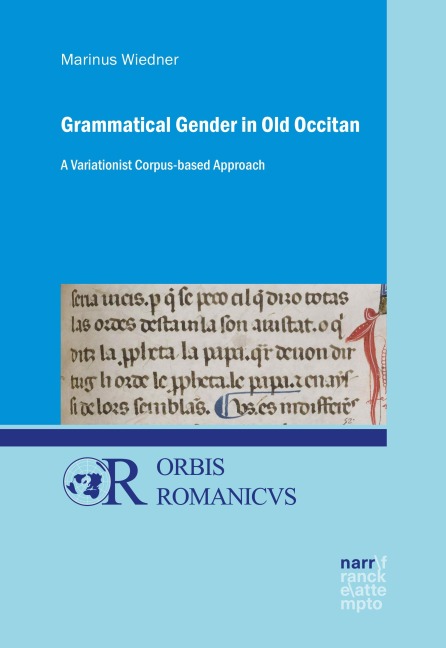
This study treats variation in grammatical gender in Old Occitan. By integrating corpus-linguistic, typological, and sociolinguistic methods, the research succeeds in tracing the dynamics of gender-systems in usage. For this sake, a corpus was created based on 17 manuscripts from the Languedoc and Provence, written in the 13th and 14th centuries. This enables the author to grasp the variation present in medieval languages and avoids biases from the normalisation of editions. With this approach, the investigation of gender variation is based on a solid empirical foundation and thus demonstrates the kinds of new insights that become attainable when linguistic data are approached from a historically informed, discourse-tradition-aware, text-pragmatic, and norm-historical perspective. Open Access: doi.org/10.24053/9783381165124
Der Sprachwissenschaftler Marinus Wiedner lehrt und forscht seit 2022 am Romanischen Seminar der Universität Freiburg.
1 Introduction 2 Definitions 3 State of the Art 4 The Old Occitan Nominal System-an Overview 5 Research Questions 6 Constitution of the Corpus COMETA 7 Technical Creation of the Corpus COMETA 8 Gender Doublets in COMETA (2025) 9 Two Comparative Case Studies 10 Analysis and Discussion 11 Conclusion Bibliography