Und dann auf "Zum Home-Bildschirm [+]".

Stöbern
genialokal zum Startbildschirm hinzufügen
Installieren Sie die genialokal App auf Ihrem Startbildschirm für einen schnellen Zugriff und eine komfortable Nutzung.
Installieren Sie die genialokal App auf Ihrem Startbildschirm für einen schnellen Zugriff und eine komfortable Nutzung.
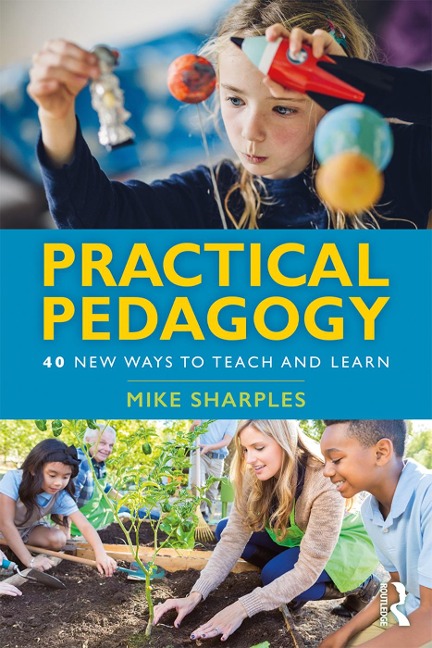
Practical Pedagogy expands the universe of teaching and learning. It provides an accessible guide to new and emerging innovations in education, with insights into how to become more effective as a teacher and learner. New teachers will find a comprehensive introduction to innovative ways of teaching and learning. Experienced educators will be surprised by the range of useful pedagogies, such as translanguaging, crossover learning, teachback, bricolage and rhizomatic learning. Policy makers will gain evidence of how new teaching methods work in practice, with resources for curriculum design and course development. Drawing on material from the hugely influential Innovating Pedagogy series of reports, this book is a compilation of the 40 most relevant pedagogies, covering: - innovative ways to teach and learn; - how pedagogies are adopted in new ways for a digital age; - evidence on how and why different methods of teaching work, including case studies set in classrooms, informal settings, and online learning spaces; - practical implications of the latest research into the science of learning, combining psychology, education, social sciences and neuroscience. Organised around six themes - Personalization, Connectivity, Reflection, Extension, Embodiment and Scale - Practical Pedagogy is a comprehensive source for teachers, policy makers, educational researchers and anyone interested in new ways to teach and learn.
Mike Sharples is Emeritus Professor of Educational Technology at The Open University, UK. He is Honorary Visiting Professor at Anglia Ruskin University, Centre for Innovation in Higher Education. His research involves pedagogy-informed design of new technologies and environments for learning. He is author of over 300 publications in pedagogy, science education, educational technology and the learning sciences.
1. Innovative pedagogy Section 1. Personalization 2. Adaptive teaching 3. Spaced learning 4. Personal inquiry 5. Dynamic assessment 6. Stealth assessment 7. Translanguaging Section 2. Connectivity 8. Crossover learning 9. Seamless learning 10. Incidental learning 11. Learning from gaming 12. Geo-learning 13. Learning through social media 14. Navigating knowledge Section 3. Reflection 15. Explore first 16. Teachback 17. Learning through argumentation 18. Computational thinking 19. Learning from animations 20. Learning to learn 21. Assessment for learning 22. Formative analytics Section 4. Extension 23. Threshold concepts 24. Learning through storytelling 25. Learning through wonder 26. Learning in remote science labs 27. Context-based learning 28. Event-based learning 29. Learning for the future Section 5. Embodiment 30. Embodied learning 31. Immersive learning 32. Maker culture 33. Bricolage 34. Design thinking Section 6. Scale 35. Massive open social learning 36. Crowd learning 37. Citizen inquiry 38. Rhizomatic learning 39. Reputation management 40. Open pedagogy 41. Humanistic knowledge-building communities 42. Pedagogies in practice
Dieses eBook wird im PDF-Format geliefert und ist mit einem Adobe Kopierschutz (DRM) versehen. Sie können dieses eBook mit allen Geräten lesen, die das PDF-Format und den Adobe Kopierschutz (DRM) unterstützen.
Zum Beispiel mit den folgenden Geräten:
• tolino Reader
Laden Sie das eBook direkt über den Reader-Shop auf dem tolino herunter oder übertragen Sie das eBook auf Ihren tolino mit einer kostenlosen Software wie beispielsweise Adobe Digital Editions.
• Sony Reader & andere eBook Reader
Laden Sie das eBook direkt über den Reader-Shop herunter oder übertragen Sie das eBook mit der kostenlosen Software Sony READER FOR PC/Mac oder Adobe Digital Editions auf ein Standard-Lesegeräte mit epub- und Adobe DRM-Unterstützung.
• Tablets & Smartphones
Möchten Sie dieses eBook auf Ihrem Smartphone oder Tablet lesen, finden Sie hier unsere kostenlose Lese-App für iPhone/iPad und Android Smartphone/Tablets.
• PC & Mac
Lesen Sie das eBook direkt nach dem Herunterladen mit einer kostenlosen Lesesoftware, beispielsweise Adobe Digital Editions, Sony READER FOR PC/Mac oder direkt über Ihre eBook-Bibliothek in Ihrem Konto unter „Meine eBooks“ - „online lesen“.
Schalten Sie das eBook mit Ihrer persönlichen Adobe ID auf bis zu sechs Geräten gleichzeitig frei.
Bitte beachten Sie, dass die Kindle-Geräte das Format nicht unterstützen und dieses eBook somit nicht auf Kindle-Geräten lesbar ist.