Und dann auf "Zum Home-Bildschirm [+]".

Stöbern
genialokal zum Startbildschirm hinzufügen
Installieren Sie die genialokal App auf Ihrem Startbildschirm für einen schnellen Zugriff und eine komfortable Nutzung.
Installieren Sie die genialokal App auf Ihrem Startbildschirm für einen schnellen Zugriff und eine komfortable Nutzung.
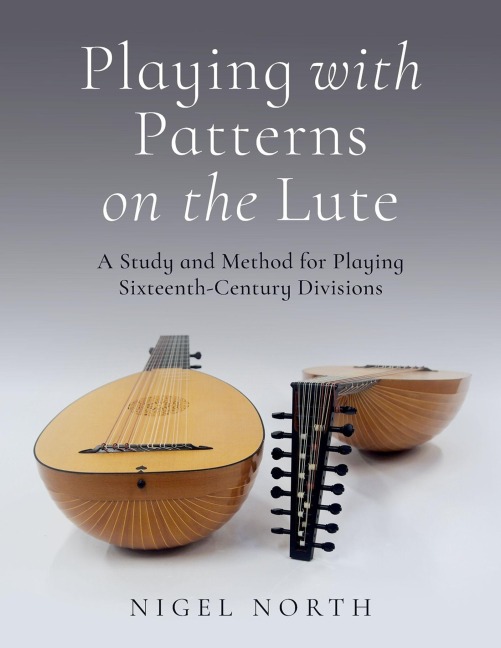
Playing with Patterns on the Lute is a practical guide for all lutenists who want to learn how to ornament their music with sixteenth-century divisions. Written for the Renaissance lute in G, it includes examples and exercises in French tablature, which is familiar to players around the world. While methods for wind and stringed instruments by writers such as Diego Ortiz, Riccardo Rognioni, and Giovanni Bassano exist, there are no surviving methods from the sixteenth century for learning these skills specifically on the lute. There are, however, a wealth of examples in thousands of European lute tablatures. Through an analysis of the divisions used by sixteenth-century lutenists in these tablature sources, internationally renowned lutenist and teacher Nigel North sets forth a method for the modern lutenist and explains, with multiple examples, how renaissance lutenists approached their division making. Focusing on patterns from eleven tablature case studies from lutenist composers, including Hans Newsidler, Alonso Mudarra, Luis de Narvaez, Francesco da Milano, Vincenzo Galilei, Giovanni Terzi, Adrian Le Roy, John Johnson, and John Dowland, North presents more than one hundred examples and exercises from their music.
Acknowledgements Part 1: Fundamentals of Divisions Ch.1 Introduction 1.1 Ornamentation types: Divisions and Graces 1.2 In search of a method for lutenists 1.3 The function of divisions 1.4 Guidelines, terms and abbreviations used Ch.2 Graces 2.1 Sixteenth-century Graces for the lute 2.2 The Capirola Lutebook, c.1517 2.3 Pietro Paulo Borrono (1548) 2.4 The most common sixteenth-century graces explained Ch.3 General Rules 3.1 Two Modes 3.2 Lute Rules for divisions Ch. 4 Twelve Types of Divisions 4.1 Cadential 4.2 Triad 4.3 Static 4.4 Interval 4.5 Doubler 4.6 Filler 4.7 Lead-in 4.8 Connector 4.9 Tirata 4.10 Contrapunto & bastarda style 4.11 Broken chords 4.12 Recomposed Part 2: Tablature Case Studies Ch.5 Tablature Case Studies: Introduction 5.1 Introduction 5.2 Annotations 5.3 Abbreviations Ch.6 Nach Willen Dein Paul Hofhaimer (1459-1537) Three versions by Hans Newsidler (1536 and 1544) Ch.7 Je Prens en grè Clemens non papa (c.1510-c.1555) as set by Mattheus Waisell (1573) Ch.8 Mille regretz attributed to Josquin des Prez (c.1450-1521) As set by Luis Narvaez (1538) Ch.9 Greensleeves Anon A treble and ground duet Ch.10 Passemeze (Passamezzo Antico) Adrian Le Roy A Briefe and easye instruction, London (1568) Ch.11 Fantasia a dui liuti (Francesco da Milano) Castelfranco ms. Extract Ch.12 Contrapunto Primo B(ernardo) M(onzino) Fronimo Dialogo, Vincenzo Galilei, Venice, 1584 Ch.13 The Queens Treble John Johnson (c.1545-1594) A treble and ground duet Ch.14: Sir John Smith, his Almain John Dowland A Varietie of Lute-Lessons, London (1610) Ch.15 Ricercata per Viola Bastarda, e Lauto Aurelio Virgiliano, Il Dolcimelo (c.1600-1620), Libro Secondo Ch.16 Chanson: Susanne un jour Lassus A contrapunto Lute Duet in Bastarda style by Giovanni Terzi, (1593) Part 3: Method Ch.17 Cadences 17.1 Cadence type 1 17.2 Cadence type 2 17.3 Cadence type 3 Ch.18 Triads 18.1 Simple 18.2 Extended 18.3 Octave extensions 18.4 Harmonic Triad 18.5 Frere Jacques 18.6 Triad divisions (Simple): Exercises 18.7 Triad divisions (Extended): Exercises 18.8 Triad divisions (Octave Extended): Exercises 18.9 Triad divisions (Harmonic): Exercises Ch.19 Static 19.1 Static divisions: Exercises (1) 19.2 Static divisions: Exercises (2) Ch.20 Intervals: 20.1 Simple interval divisions 20.2 Compound interval divisions 20.3 Scales & Octaves: Exercises 20.4 Ascending and descending 2nds 20.5 Ascending and descending 3rds 20.6 Ascending and descending 4ths 20.7 Ascending and descending 5ths 20.8 Ascending and descending 6ths Ch.21 Guided lessons in building patterns 21.1 Lesson 1 on the ground from The Queen's Treble 21.2 Lesson 2 on the Passamezzo Antico 21.3 Lesson 3: Adding divisions to a solo piece Ch.22 Practice piece # 1: Twinkle, twinkle Ch.23 Practice piece # 2: Arbeau Pavane: Belle qui tiens ma vie Ch.24 Ground # 1: La Gamba (Cara Cosa) Ch.25 Ground # 2: Passamezzo Antico 25.1 As a treble and ground duet 25.2 Solo lute Ch.26 Ground #3: Passamezzo Moderno Ch.27 Ground #4: Romanesca Ch.28 Madrigal: Anchor che col partire (de Rore) 28.1 Original Madrigal a 4 (SATB) 28.2 Cantus (to practice divisions) with an intabulation of ATB. 28.3 Example: A new contrapunto/bastarda style, with an intabulation based on Paladino's intabulation (1560) 28.4 SATB Intabulation (as above) with a spare stave for improvising or composing your own contrapunto Appendix 1: Ornamentation treatises 1535-1620 (for voice, wind and string instruments) Appendix 2: The original parts for Lute 1 and Lute 2. G.A. Terzi (1593) Index
Dieses eBook wird im PDF-Format geliefert und ist mit einem Adobe Kopierschutz (DRM) versehen. Sie können dieses eBook mit allen Geräten lesen, die das PDF-Format und den Adobe Kopierschutz (DRM) unterstützen.
Zum Beispiel mit den folgenden Geräten:
• tolino Reader
Laden Sie das eBook direkt über den Reader-Shop auf dem tolino herunter oder übertragen Sie das eBook auf Ihren tolino mit einer kostenlosen Software wie beispielsweise Adobe Digital Editions.
• Sony Reader & andere eBook Reader
Laden Sie das eBook direkt über den Reader-Shop herunter oder übertragen Sie das eBook mit der kostenlosen Software Sony READER FOR PC/Mac oder Adobe Digital Editions auf ein Standard-Lesegeräte mit epub- und Adobe DRM-Unterstützung.
• Tablets & Smartphones
Möchten Sie dieses eBook auf Ihrem Smartphone oder Tablet lesen, finden Sie hier unsere kostenlose Lese-App für iPhone/iPad und Android Smartphone/Tablets.
• PC & Mac
Lesen Sie das eBook direkt nach dem Herunterladen mit einer kostenlosen Lesesoftware, beispielsweise Adobe Digital Editions, Sony READER FOR PC/Mac oder direkt über Ihre eBook-Bibliothek in Ihrem Konto unter „Meine eBooks“ - „online lesen“.
Schalten Sie das eBook mit Ihrer persönlichen Adobe ID auf bis zu sechs Geräten gleichzeitig frei.
Bitte beachten Sie, dass die Kindle-Geräte das Format nicht unterstützen und dieses eBook somit nicht auf Kindle-Geräten lesbar ist.