Und dann auf "Zum Home-Bildschirm [+]".

Stöbern
genialokal zum Startbildschirm hinzufügen
Installieren Sie die genialokal App auf Ihrem Startbildschirm für einen schnellen Zugriff und eine komfortable Nutzung.
Installieren Sie die genialokal App auf Ihrem Startbildschirm für einen schnellen Zugriff und eine komfortable Nutzung.
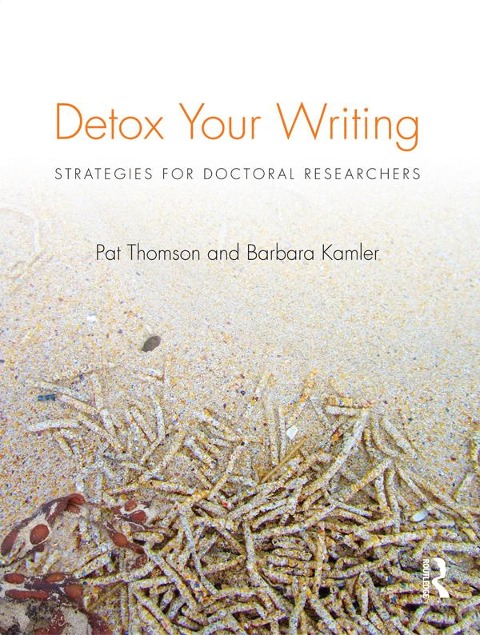
There are a number of books which aim to help doctoral researchers write the PhD. This book offers something different - the scholarly detox. This is not a faddish alternative, it's not extreme. It's a moderate approach intended to gently interrupt old ways of doing things and establish new habits and orientations to writing the PhD. The book addresses the problems that most doctoral researchers experience at some time during their candidature - being unclear about their contribution, feeling lost in the literature, feeling like an imposter, not knowing how to write with authority, wanting to edit rather than revise. Each chapter addresses a problem, suggests an alternative framing, and then offers strategies designed to address the real issue. Detox Your Writing is intended to be a companionable work book - something doctoral researchers can use throughout their doctorate to ask questions about taken-for-granted ways of writing and reading, and to develop new and effective approaches. The authors' distinctive approach to doctoral writing mobilises the rich traditions of linguistic scholarship, as well as the literatures on scholarly identity formation. Building on years of expertise they place their emphasis both on tools and techniques as well as the discursive practices of becoming a scholar. The authors provide a wide repertoire of strategies that doctoral researchers can select from, rather than a linear lock step progression through a set of exercises. The book is a toolkit but a far from prescriptive one. It shows that there are many routes to developing a personal academic voice and identity and a well-crafted text. With points for reflection alongside examples from a broad range of disciplines, the book offers thinking tools, writing tools, linguistic tools, and reading tools which are relevant to all stages of doctoral research. This practical text can be used in all university doctoral training and composition and writing courses. However, it is not a dry how-to-do-it manual that ignores debates or focuses solely on the mechanical at the expense of the lived experience of doctoral research. It provides a practical, theorised, real-world, guide to postgraduate writing.
Barbara Kamler is an Emeritus Professor at Deakin University and an Honorary Professor at The University of Sydney. Thomson is Professor of Education and Director of the Centre for Advanced Studies at The University of Nottingham, a special Professor at Deakin University and an adjunct Professor at the Free University, South Africa. She blogs regularly on doctoral education on wwwpatthomson.wordpress.com Kamler and Thomson have an established reputation in the field. Thomson is an active PhD supervisor and both conduct writing workshops for universities in a range of locations. They have written a number of articles, book chapters and two other books together: Helping doctoral students write: pedagogies for supervision (2006) and Writing for peer reviewed journals: Strategies for getting published (2012). Kamler is co-editor of Publishing pedagogies for the doctorate and beyond (2010). Thomson is co editor of The Routledge Doctoral Students Companion and The Routledge Doctoral Supervisors Companion (2010). The books are all published by Routledge.
Acknowledgements 1. Introduction 2. Understanding the doctoral game 3. Beginning literature work 4. Finding your place 5. Learning to argue 6. Performing your research 7. Structuring the thesis 8. Writing the researcher into the text 9. Revising the first draft 10. Writing as the expert scholar References
Dieses eBook wird im PDF-Format geliefert und ist mit einem Adobe Kopierschutz (DRM) versehen. Sie können dieses eBook mit allen Geräten lesen, die das PDF-Format und den Adobe Kopierschutz (DRM) unterstützen.
Zum Beispiel mit den folgenden Geräten:
• tolino Reader
Laden Sie das eBook direkt über den Reader-Shop auf dem tolino herunter oder übertragen Sie das eBook auf Ihren tolino mit einer kostenlosen Software wie beispielsweise Adobe Digital Editions.
• Sony Reader & andere eBook Reader
Laden Sie das eBook direkt über den Reader-Shop herunter oder übertragen Sie das eBook mit der kostenlosen Software Sony READER FOR PC/Mac oder Adobe Digital Editions auf ein Standard-Lesegeräte mit epub- und Adobe DRM-Unterstützung.
• Tablets & Smartphones
Möchten Sie dieses eBook auf Ihrem Smartphone oder Tablet lesen, finden Sie hier unsere kostenlose Lese-App für iPhone/iPad und Android Smartphone/Tablets.
• PC & Mac
Lesen Sie das eBook direkt nach dem Herunterladen mit einer kostenlosen Lesesoftware, beispielsweise Adobe Digital Editions, Sony READER FOR PC/Mac oder direkt über Ihre eBook-Bibliothek in Ihrem Konto unter „Meine eBooks“ - „online lesen“.
Schalten Sie das eBook mit Ihrer persönlichen Adobe ID auf bis zu sechs Geräten gleichzeitig frei.
Bitte beachten Sie, dass die Kindle-Geräte das Format nicht unterstützen und dieses eBook somit nicht auf Kindle-Geräten lesbar ist.