Und dann auf "Zum Home-Bildschirm [+]".

Stöbern
genialokal zum Startbildschirm hinzufügen
Installieren Sie die genialokal App auf Ihrem Startbildschirm für einen schnellen Zugriff und eine komfortable Nutzung.
Installieren Sie die genialokal App auf Ihrem Startbildschirm für einen schnellen Zugriff und eine komfortable Nutzung.
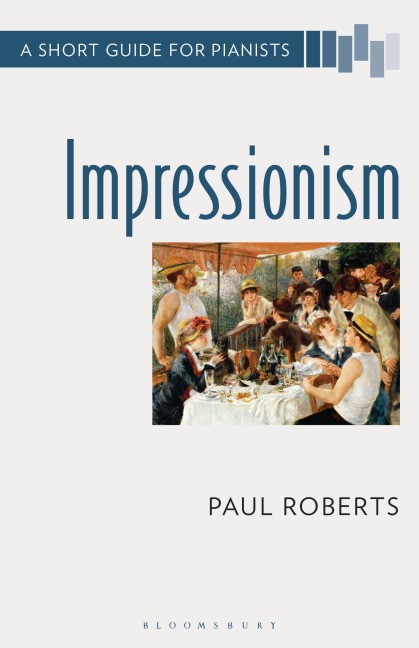
Impressionist piano works are among the greatest in the repertoire. Gain foundational insights with this guide, from history and cultural context to interpretation and performance.
Renowned pianist Paul Roberts seeks to answer the question "What is Impressionism in relation to piano music?" In highly accessible prose, he illuminates several connected topics to understand this beloved repertoire so that pianists can create the most vivid performances. An Impressionist technique of pianism, not unconnected to past traditions, serves a colorful, imaginative world that is wholly contemporary and wholly French - a period when music and painting were endlessly discussed.
How do we relate to this imaginative world, and what is required of us, technically and artistically? How does the pianist, whether amateur, student, or young professional, prepare an Impressionist piece or program?
Beginning with an overview of the period and an exploration of how the celebrated label became attached to the music of Claude Debussy and Maurice Ravel, this guide immerses us in their beloved piano masterpieces and explores the art of performance.
Paul Roberts is a British concert pianist. He teaches and performs throughout Europe and America and is the artistic director of Music & Theatre at Chateau d'Aix in France. He is the author of Images: The Piano Music of Claude Debussy (2003), Reflections: The Piano Music of Maurice Ravel (2012), and Reading Franz Liszt: Revealing the Poetry Behind the Piano Music (2022).
Series Preface
Acknowledgements
List of Figures
Introduction
1. What is Impressionism?
2. Playing Impressionism
3. Debussy and Ravel
4. Pictures
5. Images of Water
6. Preludes
7. Gaspard de la nuit
8. To Sum Up
Some Thoughts on Performers and Recording
Select Bibliography
Notes
Index