Stöbern
genialokal zum Startbildschirm hinzufügen
Installieren Sie die genialokal App auf Ihrem Startbildschirm für einen schnellen Zugriff und eine komfortable Nutzung.
Installieren Sie die genialokal App auf Ihrem Startbildschirm für einen schnellen Zugriff und eine komfortable Nutzung.
Tippen Sie einfach auf Teilen:
 Und dann auf "Zum Home-Bildschirm [+]".
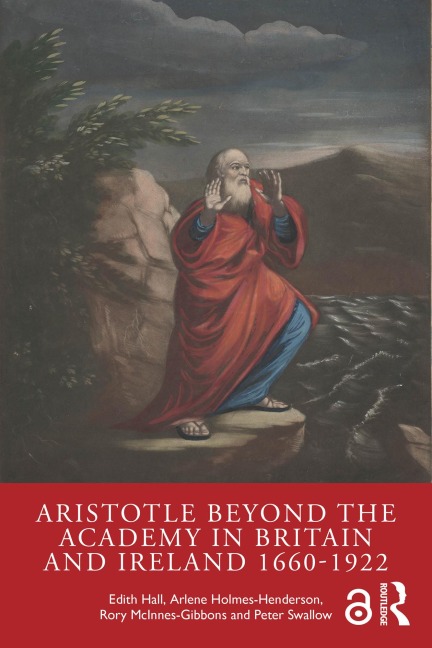
This book explores the questions of when, where, how and why Aristotle has appeared in England, Scotland, Ireland and Wales since the Restoration in 1660, through to Irish Independence in 1922.The primary focus is on ethics and politics, natural science, and rhetoric and the arts. Chapters explore the impact of specific events in the history of Aristotelian reception over this period, taking the reader thematically on a journey through Aristotle's diverse academic interests. The authors argue that Aristotle's authority has been omnipresent but never monolithic: it has been vigorously contested. This giant of western culture has by no means been used uniformly to reinforce established authority or symbolise Catholic conservatives; he has equally been adopted by radicals and progressives. Aristotle's authority has been invoked by apologists for absolute monarchy and by Chartist revolutionaries; by patriarchal opponents of women's rights and by suffrage activists; by apologists for slavery and by advocates of universal suffrage; by critics of stage censorship and by its advocates; by Deists questioning God's involvement in human affairs and Roman Catholics insisting upon it. This volume explores all these various interpretations, appropriations and adaptations of his work. This fascinating study appeals not only to students and scholars of classics and philosophy, but also to specialists in British and Irish early modern and modern history, popular culture, political and intellectual history, as well as those studying the history of science, sexuality, and rhetoric.
Edith Hall FBA FRSA is Professor of Classics at Durham University and Co-Founder as well as Consultant Co-Director of the Archive of Performances of Greek and Roman Drama at Oxford University. Arlene Holmes-Henderson MBE is Professor of Classics Education and Public Policy at Durham University. She is also a civil servant, working in the Government Office for Science on a part-time basis. Rory McInnes-Gibbons is a postdoctoral researcher on the Leverhulme-funded project Aristotle Beyond the Academy at Durham University working alongside Professor Edith Hall and Professor Arlene Holmes-Henderson. Peter Swallow was the full-time research fellow for the project working on the popular reception of Aristotle's natural science (2022 to 2024). On July 4th, 2024 Peter was elected to Parliament as the first Labour MP for the Bracknell constituency. He now chairs the Classics All-Party Parliamentary Group in Westminster.
Acknowledgements.About the Authors.List of Images. List of Abbreviations. Introduction: 'The Mighty Stagyrite' Edith Hall. Politics and Society. 1 Constitutional Aristotle Edith Hall. 2 Aristotle and the Abolition of Slavery Edith Hall. 3 Aristotle and the Status of Women Edith Hall. 4 Aristotle and Democratic Reform Edith Hall. Science, Technology and Health. 5 Science, Christianity and the Royal Society Edith Hall. 6 Applying Aristotelian Science 1660-1760 Edith Hall. 7 The Mystery of Aristotle's Masterpiece Rory McInnes-Gibbons. 8 Nature's Hierarchy From Aristotle to Darwin Peter Swallow. 9 George Henry Lewes, D'Arcy Wentworth Thompson and Aristotle's Natural History Rory McInnes-Gibbons. Oratory and the Arts. 10 Aristotle and the Clergy Arlene Holmes-Henderson. 11 Jurists and Jurisprudence Edith Hall and Arlene Holmes-Henderson. 12 Controversies Over the Arts Edith Hall. 13 Laughing at Aristotle Edith Hall. Consolidated Bibliography. Index.