Und dann auf "Zum Home-Bildschirm [+]".

Stöbern
genialokal zum Startbildschirm hinzufügen
Installieren Sie die genialokal App auf Ihrem Startbildschirm für einen schnellen Zugriff und eine komfortable Nutzung.
Installieren Sie die genialokal App auf Ihrem Startbildschirm für einen schnellen Zugriff und eine komfortable Nutzung.
Ihr gewünschter Artikel ist in 0 Buchhandlungen vorrätig - wählen Sie hier eine Buchhandlung in Ihrer Nähe aus:

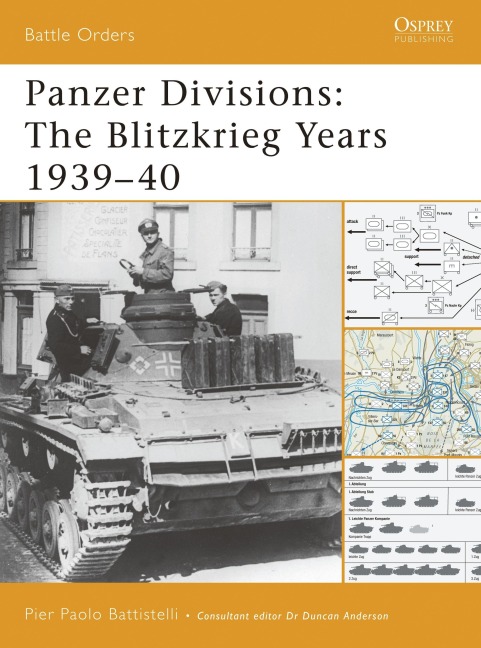
At the outbreak of World War II in September 1939, Germany's armored forces - the Panzerwaffe - were still in their infancy. The restrictions imposed by the Treaty of Versailles meant that German tank development had to be conducted in secret. Initial armor campaigns in Poland were not completely successful and changes were needed before the invasion of France. This book examines the organizational changes, developments in doctrine and tactics, and improved command and control that provided the basis for the spectacular success of the Panzer divisions in 1940. Although the Panzerwaffe was still largely inferior to its enemies in terms of both tank numbers and quality, it effectively adapted and developed those doctrines and principles of warfare that had shaped German fighting since the 19th century. Achieving tactical and operational surprise, the Panzer divisions succeeded in breaking through enemy defences in the Ardennes and enveloping a large number of hostile forces at Dunkirk. The legend of the Blitzkrieg was born.
Pier Paolo Battistelli earned his PhD in military history at the University of Padua. A scholar of German and Italian politics and strategy throughout World War II, he is active in Italy and abroad writing titles and essays on military history subjects. A contributor to the Italian Army Historical Office, he is currently revising his PhD thesis for publication, The War of the Axis: German and Italian Military Partnership in World War Two, 1939-1943. The author lives in Foligno, Italy.
Introduction Combat mission Doctrine and training Unit organization Tactics Command, control, communications and intelligence (C3I) Weapons and equipment Lessons learned Chronology Bibliography Glossary Index