Und dann auf "Zum Home-Bildschirm [+]".

Stöbern
genialokal zum Startbildschirm hinzufügen
Installieren Sie die genialokal App auf Ihrem Startbildschirm für einen schnellen Zugriff und eine komfortable Nutzung.
Installieren Sie die genialokal App auf Ihrem Startbildschirm für einen schnellen Zugriff und eine komfortable Nutzung.
Ihr gewünschter Artikel ist in 0 Buchhandlungen vorrätig - wählen Sie hier eine Buchhandlung in Ihrer Nähe aus:
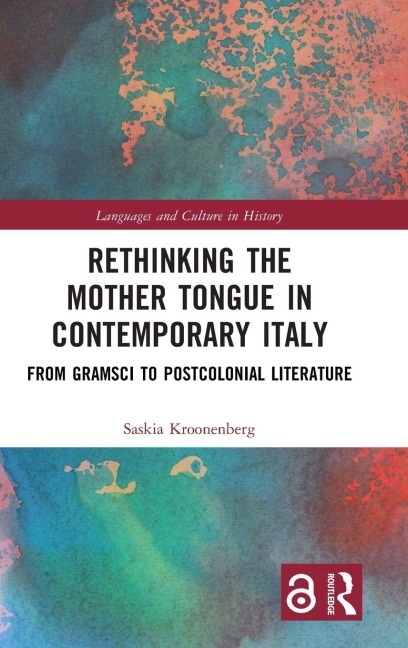
Italy has always been a multilingual country, a place of many mother tongues. United as a state in 1861, the government attempted to "make Italians" - i.e., to create cohesion amongst its very different communities - by implementing one national language. Antonio Gramsci, who was trained as a linguist, observed how these linguistic policies played a role of intimacy in creating political hegemony, while oppressing the subalterns. Discussing language, that is, he criticized Italy's internal colonialism and the Fascist regime. Rethinking the Mother Tongue in Contemporary Italy: From Gramsci to Postcolonial Literature asks what Gramsci's thoughts on language mean for the present. It zooms in on Gramsci's notion of "immanent grammar" and reads it alongside contemporary Italian postcolonial literature. It also under lines how Italy's national Language Question has been involved with territorial expansion and questions of gendered and racialized bodies. Taking Italy as a case study, this book argues against monolingual and ethno-linguistic notions of the mother tongue and proposes to rethink the mother tongue from an immanent perspective: As an open-ended relation between language, bodies and terra, as immanent grammar. It will be of interest to scholars in the fields of gender and postcolonial theory, new materialism, Italian studies, comparative literature, intellectual history, linguistics, philosophy of language and transnational humanities.
Dr. Saskia Kroonenberg is a scholar in cultural studies at Radboud University (the Netherlands). Her research spans literary and cultural studies, Antonio Gramsci, new materialism, postcolonial and gender studies
Table of Contents Introduction The Notion of the Mother Tongue Postcolonial Gramsci Immanent Grammar: Language, Terra, Body Outline of the Book A Note on this Language Chapter 1. The Language Question and the Mother Tongue: Unification, Expansion, Exclusion A Missing Mother Tongue Unifying Italy: The Language Question Expanding Italy: Colonialism and Fascism A Living Mother Tongue: Technologies and Varieties Postcolonial Literature and the Mother Tongue Conclusion: A Mother Tongue with an Accent Chapter 2. Gramsci and the Mother Tongue: Immanent Grammar, Subalternity, Molecular Changes Gramsci the Linguist Immanent Grammar Immanent Grammar and Subalternity Immanence: Language Immanence: Terra Immanence: Body Conclusion: Rethinking the Mother Tongue with Gramsci Chapter 3. Rethinking the Mother Tongue Today: From Gramsci to Postcolonial Literature From Gramsci to Future Future is a Verb Grammar and Racism in "Nassan Tenga" Terra and Names in "Il mio nome" Bodies and Meanings in "Abbiamo pianto un fiume di risate" Conclusion: Language, Terra, Body Conclusion: The Mother Tongue as Immanent Grammar The Mother Tongue in Italy