Und dann auf "Zum Home-Bildschirm [+]".

Stöbern
genialokal zum Startbildschirm hinzufügen
Installieren Sie die genialokal App auf Ihrem Startbildschirm für einen schnellen Zugriff und eine komfortable Nutzung.
Installieren Sie die genialokal App auf Ihrem Startbildschirm für einen schnellen Zugriff und eine komfortable Nutzung.
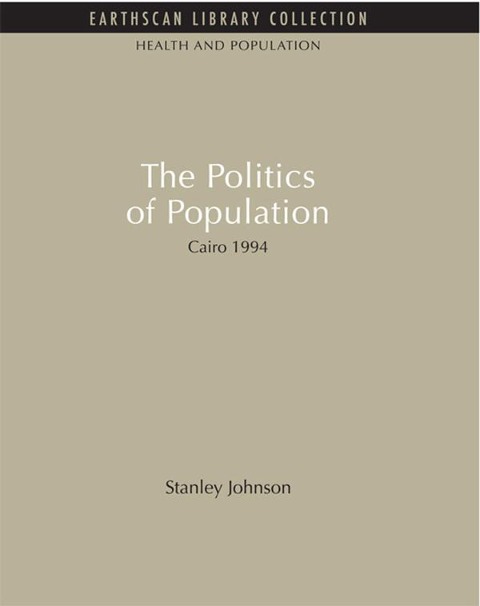
The International Conference on Population and Development in Cairo in 1994 represented a remarkable watershed. Not only did it produce an unprecedented degree of agreement among the 179 countries and thousands of non-governmental organizations taking part, it also created a wide-ranging Programme of Action which for the first time offers real chances of progress, by putting population policies at the heart of the struggle for social development. This book recounts what actually happened in Cairo and how it was achieved. The early chapters look in some detail at the preparations for Cairo, in the context of over three decades of attempts to integrate population, development and environmental issues. Focusing on the key controversial questions, including abortion, contraception and adolescent sex, it examines the ways in which attempts were made to reconcile opposing positions. Setting the discussion in a much wider context, it argues that Cairo witnessed a 'quantum leap' in the way the population issue is seen, and the need to give them control over their own lives, - central to the discussion about population, resources and development. The Programme of Action which emerged from the conference, particularly the parts dealing with gender issues (included here in appendices), is the most forward-looking ever adopted. As a whole the Programme is probably one of the most important social documents of our time. This book captures both the drama and the detail of its creation. Stanley Johnson edited The Population Problem (1974) and is the author of World Population and the United Nations (1987) and World Population - Turning the Tide (1994), as well as numerous other books, including eight novels. Originally published in 1995
Stanley Johnson
Preface Glossary 1. Setting the scene Bucharest, 1974 Mexico City, 1984 Evolving Perceptions Themes and Agendas for Cairo 2. Preparing for the ICPD Background The six Expert Croup Meetings Regional Conferences ICPD PrepCom II, May 1993 General discussion at PrepCom II Abortion Quantitative goals Resources for the New World Population Plan of Action The UN General Assembly, November 1993 3. The Third Meeting of the ICPD's Preparatory Committee Population Growth Other Key Elements of the Programme of Action A Bold, Visionary Document The Politics of Population Children by Choice not Chance The Third Prepcom How Important were the 'Ifs'? The Position of the Vatican How many Divisions has the Pope? Abortion 4. The Guns of August, 1994 Objections from the Islamic States Islam and the Vatican Anti-US Feelings Views within the US Further Shenanigans 5. The Opening of the Cairo Conference Brundtland and Bhutto The 'Third Woman': Dr Nafis Sadik 6. The Controversy over Abortion The Speeches of the Plenary Debates The Battle over Paragraph 8.25 Some Signs of Agreement The Final Text Definition of Reproductive Health: Another Hard-Fought Issue Concluding Business 7. The Empowerment of Women After the Earth Summit The NGO Treaty on Population, Environment and Development The Women's Declaration on Population Policies WED0 and the Women's Caucus The NGO Forum The Delegates' Response to the Empowerment of Women Theme 8. Adolescence Looking Closer at the Draft 9. International Migration Chapter X of the Draft Family Unification Contents l 0. Population Stabilisation Beyond Just Numbers Support for the Goal of Population Stabilisation The Asian Nations The African States Drafting vs Plenary Sessions 11. Resources Differing priorities 12. Closing Session - Looking Ahead The 49th General Assembly Appendix A: Summary of the Programme of Action of the International Conference on Population and Development Appendix B: United Nations General Assembly Resolution 49/128: Report of the International Conference on Population and Development Appendix C: Cairo Programme of Action: Chapter IV, Gender Equality, Equity and Empowerment of Women Notes Index
Dieses eBook wird im PDF-Format geliefert und ist mit einem Adobe Kopierschutz (DRM) versehen. Sie können dieses eBook mit allen Geräten lesen, die das PDF-Format und den Adobe Kopierschutz (DRM) unterstützen.
Zum Beispiel mit den folgenden Geräten:
• tolino Reader
Laden Sie das eBook direkt über den Reader-Shop auf dem tolino herunter oder übertragen Sie das eBook auf Ihren tolino mit einer kostenlosen Software wie beispielsweise Adobe Digital Editions.
• Sony Reader & andere eBook Reader
Laden Sie das eBook direkt über den Reader-Shop herunter oder übertragen Sie das eBook mit der kostenlosen Software Sony READER FOR PC/Mac oder Adobe Digital Editions auf ein Standard-Lesegeräte mit epub- und Adobe DRM-Unterstützung.
• Tablets & Smartphones
Möchten Sie dieses eBook auf Ihrem Smartphone oder Tablet lesen, finden Sie hier unsere kostenlose Lese-App für iPhone/iPad und Android Smartphone/Tablets.
• PC & Mac
Lesen Sie das eBook direkt nach dem Herunterladen mit einer kostenlosen Lesesoftware, beispielsweise Adobe Digital Editions, Sony READER FOR PC/Mac oder direkt über Ihre eBook-Bibliothek in Ihrem Konto unter „Meine eBooks“ - „online lesen“.
Schalten Sie das eBook mit Ihrer persönlichen Adobe ID auf bis zu sechs Geräten gleichzeitig frei.
Bitte beachten Sie, dass die Kindle-Geräte das Format nicht unterstützen und dieses eBook somit nicht auf Kindle-Geräten lesbar ist.