Stöbern
genialokal zum Startbildschirm hinzufügen
Installieren Sie die genialokal App auf Ihrem Startbildschirm für einen schnellen Zugriff und eine komfortable Nutzung.
Installieren Sie die genialokal App auf Ihrem Startbildschirm für einen schnellen Zugriff und eine komfortable Nutzung.
Tippen Sie einfach auf Teilen:
 Und dann auf "Zum Home-Bildschirm [+]".
Ihr gewünschter Artikel ist in 0 Buchhandlungen vorrätig - wählen Sie hier eine Buchhandlung in Ihrer Nähe aus:
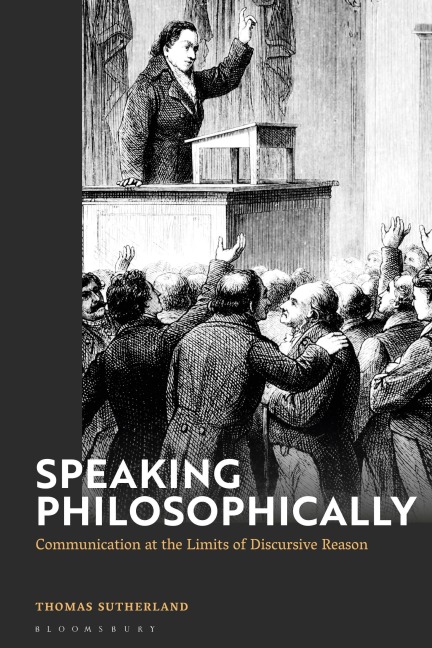
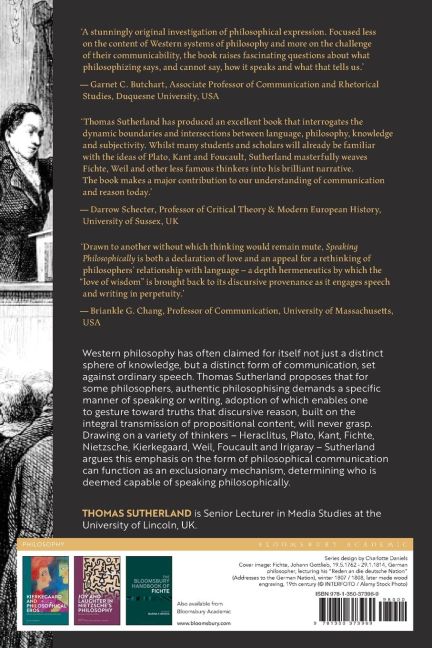
Western philosophy has often claimed for itself not just a distinct sphere of knowledge, but a distinct form of communication, set against ordinary speech. In Speaking Philosophically, Thomas Sutherland proposes that for some philosophers, authentic philosophizing demands a specific manner of speaking or writing, adoption of which enables one to gesture toward truths that propositional speech will never grasp. Drawing on a variety of thinkers - Heraclitus, Plato, Kant, Fichte, Nietzsche, Kierkegaard, Weil, Foucault, and Irigaray - Sutherland argues this emphasis on the form of philosophical communication can function as an exclusionary mechanism, determining who is deemed capable of speaking philosophically.
Thomas Sutherland is Senior Lecturer in Media Studies at the University of Lincoln, UK.
Introduction: A Philosophical Manner Of Speaking 1. Escaping The Noise Of The City: Heraclitus' Logos 2. Speaking In The Presence Of Truth: Plato And Dialectic 3. Speaking Appropriately: The Philosophical Work Ethic In Immanuel Kant 4. The Foundation Within Us: J.G. Fichte On The Role Of The Scholar 5. A New Breed Of Philosophers: Friedrich Nietzsche's Tyrannical Impulse 6. The Mark Of A True Christian: Søren Kierkegaard On Solitude 7. Aspiring To A Higher Good: Speaking Of Afbliction With Simone Weil 8. Writing At The Limits Of History: Michel Foucault And Unreason 9. Speaking With Borrowed Words: Strategic Mimesis In Luce Irigaray BIbliography Index