
Stöbern
genialokal zum Startbildschirm hinzufügen
Installieren Sie die genialokal App auf Ihrem Startbildschirm für einen schnellen Zugriff und eine komfortable Nutzung.
Installieren Sie die genialokal App auf Ihrem Startbildschirm für einen schnellen Zugriff und eine komfortable Nutzung.
Tippen Sie einfach auf Teilen:
 Und dann auf "Zum Home-Bildschirm [+]".
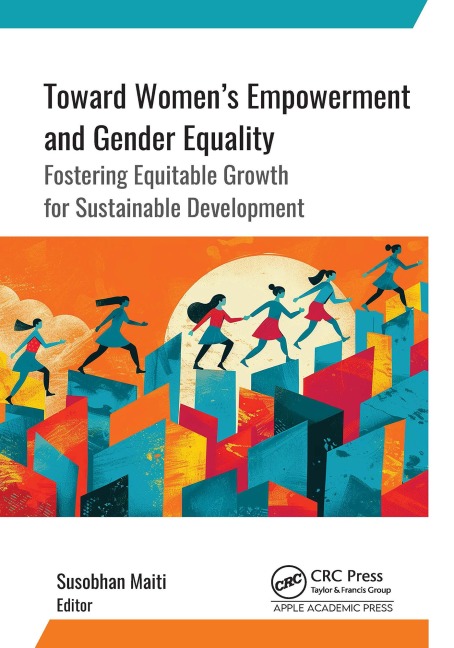
This new book, Toward Women's Empowerment and Gender Equality: Fostering Equitable Growth for Sustainable Development, explores the prevalence of gender inequality and its causes and consequences, using new and inventive ways of measuring gender inequality and providing evidence-based suggestions on how these inequalities can be mitigated. The volume presents studies on the complex social, economic, and political challenges that vary across cultures, geographies, and historical contexts. The volume addresses the 5th Sustainable Development Goals (SDGs) of the United Nations, which focuses on achieving gender equality and empowering all women and girls. The diverse topics include the impact of gender equality on sustainable development, women economic empowerment through digitalization, forced child marriage, the psychological effects of gender discrimination, how literacy plays a part in the gender gap, women in the gig economy, the challenges of women in leadership roles, how gender inequality affects women health and mental health, the effects of media representation of women on women self-esteem and career aspirations, and much more. Offering timely and perspective studies on gender equality and women empowerment, this volume provides food for thought and future research for those studying and working on SDG 5 with the aim to reduce gender inequality.
Susobhan Maiti, PhD, is an Assistant Professor in the Department of Economics in the School of Humanities and Social Sciences (SHSS) at JAIN (Deemed to be University), Bangalore, India. His major area of academic interest includes applied econometrics, industrial growth, efficiency, and productivity. His research papers have been published in international and Scopus-indexed journals. Dr. Maiti did his postgraduation program in Economics with a specialization in Econometrics at Vidyasagar University, India, and earned his PhD degree in Economics at Vidyasagar University, India. He received an ICSSR doctoral fellowship for the year 2017-2018 from the Ministry of Human Resource Development (MHRD), presently the Ministry of Education, Government of India, and qualified UGC-NET exam.
Foreword by Pinaki Das Preface Introduction PART I: WOMEN'S EMPOWERMENT, GENDER EQUALITY, AND THE UN-SUSTAINABLE DEVELOPMENT GOALS 1. Impact of Gender Equality on Sustainable Development 2. Breaking the Glass Ceiling: Analyzing Past Inequities, Confronting Current Biases, and Envisioning an Equitable Future 3. Unveiling Women's Economic Empowerment in Delhi-NCR: Investigating the Role of Financial Literacy, Digital Banking Usage, and Agency 4. Breaking Barriers, Building Prosperity: Exploring the Link Between Women's Empowerment and Economic Growth in India 5. Women's Empowerment Through Digitalization in the Economy 6. Women's Empowerment Through Micro-Credit in West Bengal 7. Child Marriage Is a Crucial Issue to Women Empowerment 8. Issues of Gender Discrimination in Different Societies: Its Psychological Effects 9. An Analysis of Backlash and Backlash Discourses Against the Istanbul Convention PART II: EDUCATION, EMPOWERMENT, AND GENDER EQUALITY 10. Gender Differences in Internet Usage Among Higher Education Students: A Study in Some Districts of West Bengal 11. Women's Education: A Gateway Towards Women Empowerment 12. Women, Literacy Rate, and Gender Gap in Agriculture PART III: WORKFORCE AND LEADERSHIP 13. Understanding the Female Labor Force Participation: A Global Perspective 14. Emotional Labor and Life Satisfaction Levels of Working Women in NGOs of Sonitpur, Assam 15. Breaking the Mold: Women in Leadership Roles in the Media Industry PART IV: WOMEN'S HEALTH AND SDG 16. Gender Inequality and Women's Health in India 17. Maternal Health Status: Evidence from Backward Districts of West Bengal 18. Unveiling Variances In C-Section Rates: A Comparative Study of Northern and Southern Regions in India PART V: WOMEN AND CONTEMPORARY ISSUES 19. Impacts of the Artificial Intelligence on the Gender Equality in the Architecture, Engineering, and Construction Industries 20. The Effects of Media Representation of Women on Women's Self-Esteem and Career Aspirations 21. Problems and Social Consequences of Child Marriage in India; Role of NGOs in Prevention of Child Marriage and Empowerment of Women 22. Women in the Gig Economy Index