Und dann auf "Zum Home-Bildschirm [+]".

Stöbern
genialokal zum Startbildschirm hinzufügen
Installieren Sie die genialokal App auf Ihrem Startbildschirm für einen schnellen Zugriff und eine komfortable Nutzung.
Installieren Sie die genialokal App auf Ihrem Startbildschirm für einen schnellen Zugriff und eine komfortable Nutzung.
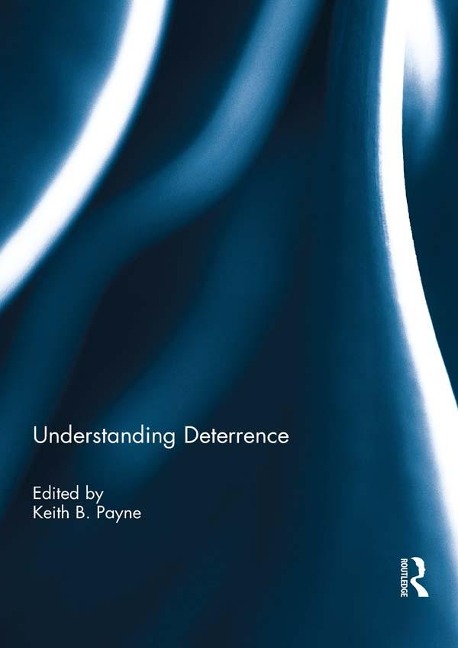
For decades, the rational actor model served as the preferred guide for U.S. deterrence policy. It has been a convenient and comforting guide because it requires little detailed knowledge of an opponent's unique decision-making process and yet typically provides confident generalizations about how deterrence works. The model tends to postulate common decision-making parameters across the globe to reach generalizations about how deterrence will function and the types of forces that will be "stabilizing" or "destabilizing." Yet a broad spectrum of unique factors can influence an opponent's perceptions and his calculations, and these are not easily captured by the rational actor model. The absence of uniformity means there can be very few deterrence generalizations generated by the use of the rational actor model that are applicable to the entire range of opponents. Understanding Deterrence considers how factors such as psychology, history, religion, ideology, geography, political structure, culture, proliferation and geopolitics can shape a leadership's decision-making process, in ways that are specific and unique to each opponent. Understanding Deterrence demonstrates how using a multidisciplinary approach to deterrence analysis can better identify and assess factors that influence an opponent's decision-making process. This identification and assessment process can facilitate the tailoring of deterrence strategies to specific purposes and result in a higher likelihood of success than strategies guided by the generalizations about opponent decision-making typically contained in the rational actor model. This book was published as a special issue of Comparative Strategy.
Keith B. Payne is President and co-founder of the National Institute for Public Policy, a non-profit research center located in Fairfax, Virginia. Dr Payne is Professor and Head of the Graduate Department of Defense and Strategic Studies, Missouri State University (Washington Campus).
1. Introduction Keith B. Payne 2. Understanding Deterrence Keith B. Payne 3. God, Nations, and Deterrence: The Impact of Religion on Deterrence Shmuel Bar 4. Evolutionary Psychology, Cognitive Function, and Deterrence Thomas Scheber 5. Nuclear Weapons Acquisition and Deterrence Kurt Guthe
Dieses eBook wird im PDF-Format geliefert und ist mit einem Adobe Kopierschutz (DRM) versehen. Sie können dieses eBook mit allen Geräten lesen, die das PDF-Format und den Adobe Kopierschutz (DRM) unterstützen.
Zum Beispiel mit den folgenden Geräten:
• tolino Reader
Laden Sie das eBook direkt über den Reader-Shop auf dem tolino herunter oder übertragen Sie das eBook auf Ihren tolino mit einer kostenlosen Software wie beispielsweise Adobe Digital Editions.
• Sony Reader & andere eBook Reader
Laden Sie das eBook direkt über den Reader-Shop herunter oder übertragen Sie das eBook mit der kostenlosen Software Sony READER FOR PC/Mac oder Adobe Digital Editions auf ein Standard-Lesegeräte mit epub- und Adobe DRM-Unterstützung.
• Tablets & Smartphones
Möchten Sie dieses eBook auf Ihrem Smartphone oder Tablet lesen, finden Sie hier unsere kostenlose Lese-App für iPhone/iPad und Android Smartphone/Tablets.
• PC & Mac
Lesen Sie das eBook direkt nach dem Herunterladen mit einer kostenlosen Lesesoftware, beispielsweise Adobe Digital Editions, Sony READER FOR PC/Mac oder direkt über Ihre eBook-Bibliothek in Ihrem Konto unter „Meine eBooks“ - „online lesen“.
Schalten Sie das eBook mit Ihrer persönlichen Adobe ID auf bis zu sechs Geräten gleichzeitig frei.
Bitte beachten Sie, dass die Kindle-Geräte das Format nicht unterstützen und dieses eBook somit nicht auf Kindle-Geräten lesbar ist.