Und dann auf "Zum Home-Bildschirm [+]".

Stöbern
genialokal zum Startbildschirm hinzufügen
Installieren Sie die genialokal App auf Ihrem Startbildschirm für einen schnellen Zugriff und eine komfortable Nutzung.
Installieren Sie die genialokal App auf Ihrem Startbildschirm für einen schnellen Zugriff und eine komfortable Nutzung.
Ihr gewünschter Artikel ist in 0 Buchhandlungen vorrätig - wählen Sie hier eine Buchhandlung in Ihrer Nähe aus:


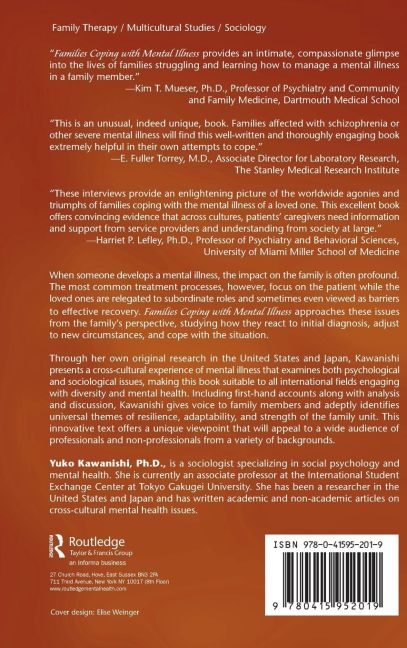
When someone develops a mental illness, the impact on the family is often profound. The most common treatment processes, however, focus on the patient while the loved ones are relegated to subordinate roles and sometimes even viewed as barriers to effective recovery.
Yuko Kawanishi, Ph.D., is an Associate Professor at the International Student Exchange Center, Tokyo Gakugei University, Assistant Professor of Sociology, Temple University (Japan), and an Affiliated Scholar, East Asian Studies Center, University of Southern California. After receiving her Ph.D. in sociology from UCLA in 1993, Dr. Kawanishi researched and traveled in the United States and Japan.
Acknowledgements. Introduction. Part I: Overview. Mental Illness in the Family: What Does it Mean. Part II: The First Signs of Mental Illness: How the Symptoms Emerged and Became Permanent. Early Impressions. Family Response and Family Feelings. Part III: What Happens to the Family System? Intrafamily Interactions: The Marital and Parent-child Relationships. Other Dimensions of Family Interactions. Part IV: Learning to Understand the New Reality of Illness. Why Did the Illness Strike? Families Look for Meaning. A Better Understanding of Chronic Mental Illness: Accepting Reality. Part V: Living with Mental Illness: Sources of Strength. Becoming Active Agents: Doing Something. Mental Coping. How Can They Go On?