Stöbern
genialokal zum Startbildschirm hinzufügen
Installieren Sie die genialokal App auf Ihrem Startbildschirm für einen schnellen Zugriff und eine komfortable Nutzung.
Installieren Sie die genialokal App auf Ihrem Startbildschirm für einen schnellen Zugriff und eine komfortable Nutzung.
Tippen Sie einfach auf Teilen:
 Und dann auf "Zum Home-Bildschirm [+]".
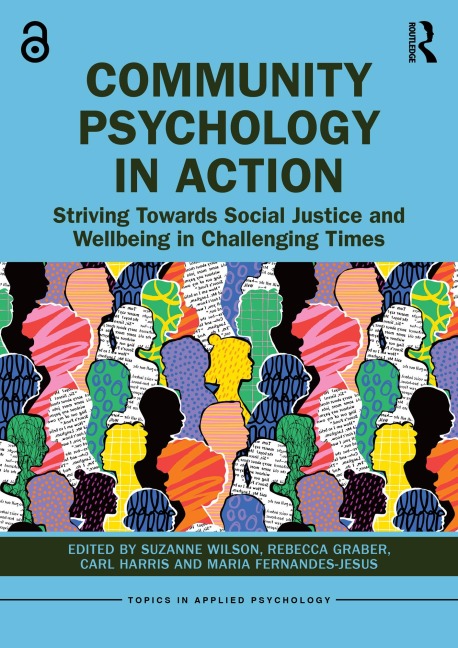
Pulling together a range of responses to local and global challenges across different community settings, this book makes the case for community psychology as a responsive tool for social justice and liberation. Using insights from both academia and professional practice, this book articulates key community psychology principles, practices and values and their role across "psy" and related professions. It draws on case studies from both the global north and south to show innovative ways in which communities have collectively taken action to demonstrate resistance and resilience, and describes creative psychological research methods that can be used to better understand and respond to the needs of communities. In so doing, it demonstrates the value of psychology, which is both embedded within and reflective of its local community and challenges, and extends our understanding of what psychology is, how it is produced and to whom it belongs. Each chapter is supported by teaching and learning activities, including reflective exercises, discussion questions, embodied activities, stakeholder assessments, case study formulations and presentations. Demonstrating how community psychology can support activities with local community members through meaningful examples of community action embedded in research, this is the ideal resource for psychology students. It may also interest professionals working in related fields, including clinical psychology, ounselling psychology, health psychology, social psychology, social work and youth work.
Suzanne Wilson is a research fellow in social inclusion and community engagement at the University of Lancashire (UK). The research agenda is to work with communities to identify effective and sustainable means of increasing community capital. This expanding portfolio of research focuses on working-class coastal communities, often regarded as being "left-behind". Rebecca Graber is a senior lecturer in health psychology at the University of Chichester. Her funded research focuses on how supportive friendships and peer relationships contribute to psychosocial resilience and wellbeing in the face of challenges such as ageing, socioeconomic marginalisation, substance addiction and LGBTQIA+ discrimination. She has formerly directed an MA in community psychology, has been a charity trustee and co-founded a network for Jewish academic and professional staff. Carl Harris is a white, British, male clinical and community psychologist with 30 years' experience in the UK's National Health Service. Based in Birmingham neighbourhoods, working in community regeneration and mental health prevention, he writes from a practitioner-researcher critical perspective with a focus on inequality. He has been a member of Psychologists Against Austerity since 2010. Maria Fernandes-Jesus is an assistant professor in psychology at the University of Sussex (UK). Her research focuses on collective action, climate justice, climate-linked mobilities, migration justice, youth participation, community solidarity and political imaginaries. She has been involved in several interdisciplinary, international and mixed-methods research projects related to these topics.
List of contributors. Acknowledgements. Introduction. Chapter 1: An invitation to Participate: Striving towards social justice and wellbeing through community, research and action. Part 1: Homes and Movement. Chapter 2: Community resilience, sense of community and participation in the context of contemporary migration. Chapter 3: "Bem-vindos a Portugal", they said. A community-engaged collaborative research on lived experiences of migrants and refugees. Chapter 4: 'Count me in': Participation and inclusion in the context of UK homelessness. Part 2: Transforming Power. Chapter 5: Participatory Action Research (PAR) as a tool for liberation in the Community Psychology from Quilombos in Brazil. Chapter 6: Claiming our Voices, Choices and Rights: Challenging Political Peripherality through Community Psychology. Chapter 7: Action for Climate Justice: Community Psychology Tackling Climate Change in an Unjust World. Chapter 8: Climate community profiling by children and youth: Fostering collective (political) hope in community contexts. Part 3: Crafting Connection. Chapter 9: Creative Relational Wealth Building in the Context of Caregiving. Chapter 10: Using creative, embodied approaches to prevention of and recovery from substance misuse: a dialogue between research and practice. Chapter 11: Surviving violence, surviving the system: secondary victimisation in the context of intimate partner violence. Chapter 12: Challenges and opportunities faced by young people in European rural communities: The roles of community psychologists. Part 4: Troubling Medicalisation: Perspectives from the UK. Chapter 13: Family Wellbeing, Community Psychology and Social Prescribing. Chapter 14: Using photo-elicitation to gain an in-depth understanding of service user and staff experience: An ethical framework for mental health research. Chapter 15: Radical Healthcare: Community action to shape person-centered health care for trans and non-binary people. Chapter 16: Promoting the use of community psychology in clinical psychology settings. Conclusions. Chapter 17: Liberation without oppression: Reimagining hope, power and solidarity. Index.