Stöbern
genialokal zum Startbildschirm hinzufügen
Installieren Sie die genialokal App auf Ihrem Startbildschirm für einen schnellen Zugriff und eine komfortable Nutzung.
Installieren Sie die genialokal App auf Ihrem Startbildschirm für einen schnellen Zugriff und eine komfortable Nutzung.
Tippen Sie einfach auf Teilen:
 Und dann auf "Zum Home-Bildschirm [+]".
Ihr gewünschter Artikel ist in 0 Buchhandlungen vorrätig - wählen Sie hier eine Buchhandlung in Ihrer Nähe aus:
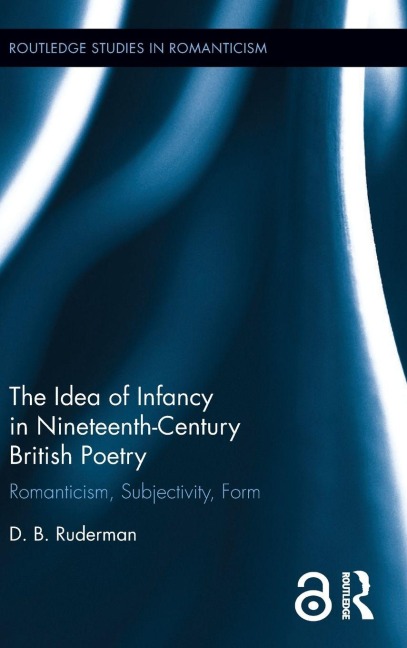
This book refigures the significance of childhood in 19th-century English poetry. By theorizing infancy as a poetics as well as a space of continual beginning, Ruderman shows how it allowed poets access to inchoate, uncanny, and mutable forms of subjectivity and art. It draws on new formalist and psychoanalytic perspectives to rethink familiar concepts such as immortality, the sublime, and the death drive, and genres such as the pastoral, the ode, and the ballad. It explores poetic experimentation and infancy in both canonical and other writers, analyzing moments of tenderness or mourning, birth or death, physical or mental illness, when infancy is analogized, eulogized, or theorized.
David Ruderman is Assistant Professor of English at The Ohio State University, USA.
Introduction: "Infant Bud of Being" 1. "Blank Misgivings": Infancy in Wordsworth's Ode 2. "When I First Saw the Child": Reverie in Erasmus Darwin and Coleridge 3. Merging and Emerging in the Work of Sara Coleridge 4. Bodies in Dissolve: Animal Magnetism and Infancy in Shelley 5. Stillborn Poetics and Tennyson's Songs Afterword: "An Echo to the Self": Augusta Webster's Psychoanalytic Thought