Stöbern
genialokal zum Startbildschirm hinzufügen
Installieren Sie die genialokal App auf Ihrem Startbildschirm für einen schnellen Zugriff und eine komfortable Nutzung.
Installieren Sie die genialokal App auf Ihrem Startbildschirm für einen schnellen Zugriff und eine komfortable Nutzung.
Tippen Sie einfach auf Teilen:
 Und dann auf "Zum Home-Bildschirm [+]".
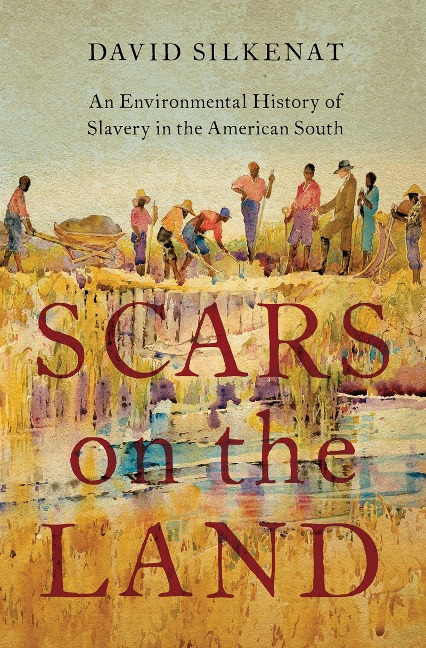
They worked Virginia's tobacco fields, South Carolina's rice marshes, and the Black Belt's cotton plantations. Wherever they lived, enslaved people found their lives indelibly shaped by the Southern environment. By day, they plucked worms and insects from the crops, trod barefoot in the mud as they hoed rice fields, and endured the sun and humidity as they planted and harvested the fields. By night, they clandestinely took to the woods and swamps to trap opossums and turtles, to visit relatives living on adjacent plantations, and at times to escape slave patrols and escape to freedom. Scars on the Land is the first comprehensive history of American slavery to examine how the environment fundamentally formed enslaved people's lives and how slavery remade the Southern landscape. Over two centuries, from the establishment of slavery in the Chesapeake to the Civil War, one simple calculation had profound consequences: rather than measuring productivity based on outputs per acre, Southern planters sought to maximize how much labor they could extract from their enslaved workforce. They saw the landscape as disposable, relocating to more fertile prospects once they had leached the soils and cut down the forests. On the leading edge of the frontier, slavery laid waste to fragile ecosystems, draining swamps, clearing forests to plant crops and fuel steamships, and introducing devastating invasive species. On its trailing edge, slavery left eroded hillsides, rivers clogged with sterile soil, and the extinction of native species. While environmental destruction fueled slavery's expansion, no environment could long survive intensive slave labor. The scars manifested themselves in different ways, but the land too fell victim to the slave owner's lash. Although typically treated separately, slavery and the environment naturally intersect in complex and powerful ways, leaving lasting effects from the period of emancipation through modern-day reckonings with racial justice.
David Silkenat is a Senior Lecturer in American History at the University of Edinburgh. He is the author of several books, including Raising the White Flag: How Surrender Defined the American Civil War, a finalist for the Gilder Lehrman Lincoln Prize.
Introduction Chapter 1 An Exhausted Soil Chapter 2 An Animal Without Hope Chapter 3 Dragged Out by the Roots Chapter 4 Breeches in the Levee Chapter 5 A Southern Cyclone Chapter 6 An Inhospitable Refuge Chapter 7 Landscape of Freedom Acknowledgments Notes Bibliography Index
Dieses eBook wird im PDF-Format geliefert und ist mit einem Adobe Kopierschutz (DRM) versehen. Sie können dieses eBook mit allen Geräten lesen, die das PDF-Format und den Adobe Kopierschutz (DRM) unterstützen.
Zum Beispiel mit den folgenden Geräten:
• tolino Reader
Laden Sie das eBook direkt über den Reader-Shop auf dem tolino herunter oder übertragen Sie das eBook auf Ihren tolino mit einer kostenlosen Software wie beispielsweise Adobe Digital Editions.
• Sony Reader & andere eBook Reader
Laden Sie das eBook direkt über den Reader-Shop herunter oder übertragen Sie das eBook mit der kostenlosen Software Sony READER FOR PC/Mac oder Adobe Digital Editions auf ein Standard-Lesegeräte mit epub- und Adobe DRM-Unterstützung.
• Tablets & Smartphones
Möchten Sie dieses eBook auf Ihrem Smartphone oder Tablet lesen, finden Sie hier unsere kostenlose Lese-App für iPhone/iPad und Android Smartphone/Tablets.
• PC & Mac
Lesen Sie das eBook direkt nach dem Herunterladen mit einer kostenlosen Lesesoftware, beispielsweise Adobe Digital Editions, Sony READER FOR PC/Mac oder direkt über Ihre eBook-Bibliothek in Ihrem Konto unter „Meine eBooks“ - „online lesen“.
Schalten Sie das eBook mit Ihrer persönlichen Adobe ID auf bis zu sechs Geräten gleichzeitig frei.
Bitte beachten Sie, dass die Kindle-Geräte das Format nicht unterstützen und dieses eBook somit nicht auf Kindle-Geräten lesbar ist.