Stöbern
genialokal zum Startbildschirm hinzufügen
Installieren Sie die genialokal App auf Ihrem Startbildschirm für einen schnellen Zugriff und eine komfortable Nutzung.
Installieren Sie die genialokal App auf Ihrem Startbildschirm für einen schnellen Zugriff und eine komfortable Nutzung.
Tippen Sie einfach auf Teilen:
 Und dann auf "Zum Home-Bildschirm [+]".
Ihr gewünschter Artikel ist in 0 Buchhandlungen vorrätig - wählen Sie hier eine Buchhandlung in Ihrer Nähe aus:
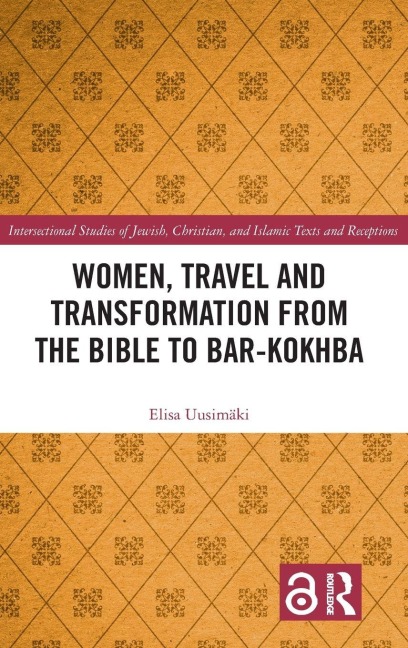
This book provides a novel, cultural-historical perspective on travel in the ancient world by exploring a wide range of women's (in)voluntary journeys and relocations, such as can be derived from passing references, short sections, and extended narratives found in the early Jewish corpora that remain to us. The book delivers a more nuanced notion of the past by challenging and demonstrating the need to move beyond the binary idea of "female stayers" and "male movers." In doing so, it foregrounds a previously overlooked aspect of travel history: female mobility, its many facets and inherent complexity as a sociocultural phenomenon, and its multiple transformational effects. The selected sources include a large body of literary texts from the Hebrew Bible, Septuagint, Pseudepigrapha, Dead Sea Scrolls, Philo of Alexandria, Flavius Josephus, and the New Testament, together with some documentary sources indicating the existence of certain types of travel up until the early second century ce. They reveal a variety of mobile girls and women, such as brides, businesswomen, captives, diplomats, diviners, economic and forced migrants, knowledge-seekers, midwives, musicians, nurses, pilgrims, refugees, sages, (semi)nomads, slaves, tourists, and war leaders. Women, Travel and Transformation from the Bible to Bar-Kokhba is of interest to students and scholars working on travel history, early Jewish literature, and women in antiquity, as well as those in biblical studies, religious studies, ancient history, and classics.
Elisa Uusimäki is a professor of biblical studies at Aarhus University. She has published widely on topics such as travel history, gender and intersectionality, lived ancient religion, wisdom traditions, and early biblical reception. In 2021-2026, she was the PI of the ERC-funded project An Intersectional Analysis of Ancient Jewish Travel Narratives.
Acknowledgements; PART I: INTRODUCTION; 1. Rethinking Ancient Travel; 2. From Text to Cultural History; PART II: DAILY COMINGS AND GOINGS; 3. (Semi)nomads, Habitual Migrants; 4. Enslaved Women and Slave-Wives: Homemaking in Unexpected Places; 5. Experts: Mapping out Everyday Movers; PART III: WARFARE AND WAYFARING; 6. War Captives and Hostages: Moving Women Around as Property; 7. Forced Migrants: Memories of Mobility in Near Eastern Empires; 8. Refugees: Making Proactive Choices in the Middle of Chaos; 9. Leaders, Fighters, Companions: Other Women Mobilised by War; PART IV: NEW CHAPTERS IN LIFE; 10. Brides and Wives: Relocations for the Sake of Marriage and Family; 11. Economic Migrants: Families and Widows in Search of a Better Life; PART V: GROWING HORIZONS; 12. Shrine Visitors: Divine-Human Communication in Temples; 13. Tourists and Sightseers: Re-experiencing the Past; 14. Sages and Lovers of Learning: Intersections of Travel and Knowledge; PART VI: AT THE INTERSECTION; 15. Conclusion: Remarks on Travellers Known and Unknown. Bibliography;Index.