Stöbern
genialokal zum Startbildschirm hinzufügen
Installieren Sie die genialokal App auf Ihrem Startbildschirm für einen schnellen Zugriff und eine komfortable Nutzung.
Installieren Sie die genialokal App auf Ihrem Startbildschirm für einen schnellen Zugriff und eine komfortable Nutzung.
Tippen Sie einfach auf Teilen:
 Und dann auf "Zum Home-Bildschirm [+]".
Ihr gewünschter Artikel ist in 0 Buchhandlungen vorrätig - wählen Sie hier eine Buchhandlung in Ihrer Nähe aus:
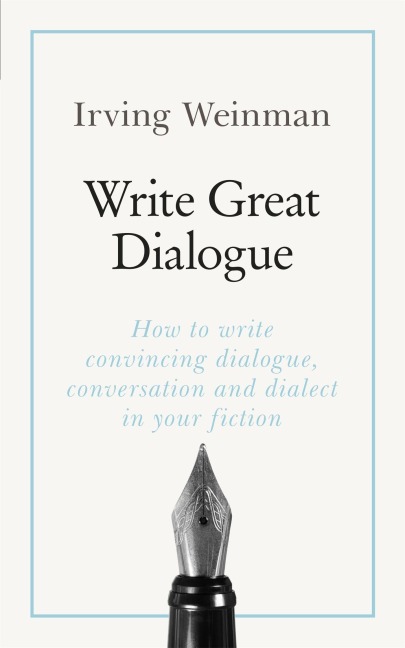
Commissioning editors say good dialogue is one of the first things that make a book stand out from the crowd - and similarly, that clunky direct speech is one of the first things that will send a book straight from the slushpile to the rejections bin. But while many other aspects of writing are pored over in intense detail, there have been very few books on the art of writing successful dialogue. In this practical guide for aspiring writers of all levels, Irving Weinman, himself a published writer and well-known creative writing tutor, uses case studies to help you explore how to write good dialogue, and gives you a range of fun and challenging exercises that will help you to write great dialogue.
Irving Weinman is an American author who has written 6 published books, for publishers including Faucett and John Daniel, and has contributed to the New York Times Book Review. He teaches Creative Writing at the University of Sussex.
- : 1 An Overview of Dialogue- : 1 An Overview of Dialogue- : 2 Character in Dialogue I (dialogue in character)- : 2 Character in Dialogue I (dialogue in character)- : 3 Narrative in Dialogue- : 3 Narrative in Dialogue- : 4 Dialogue in Narrative (non 'scene' dialogue)- : 4 Dialogue in Narrative (non 'scene' dialogue)- : 5 Versions of Dialogue (monologue, thoughts, letters, diaries, voice messages)- : 5 Versions of Dialogue (monologue, thoughts, letters, diaries, voice messages)- : 6 Dialogue and Indirect Speech- : 6 Dialogue and Indirect Speech- : 7 Transitions in and out of Dialogue- : 7 Transitions in and out of Dialogue- : 8 Dialogue Imitations of Reality (crowds, multiple speech, interrupted speech, foreign languages)- : 8 Dialogue Imitations of Reality (crowds, multiple speech, interrupted speech, foreign languages)- : 9 Character in Dialogue II (using dialogue to learn about your characters: the art of not listening, getting them angry, letting their hair down)- : 9 Character in Dialogue II (using dialogue to learn about your characters: the art of not listening, getting them angry, letting their hair down)- : 10 The Far Reaches of Dialogue (experimental approaches, shifting dialogue- : 10 The Far Reaches of Dialogue (experimental approaches, shifting dialogue between characters)- : 11 Dialogue in Summary (some exercises, some suggested reading)- : between characters)- : 11 Dialogue in Summary (some exercises, some suggested reading)- : 11 Dialogue in Summary (some exercises, some suggested reading)