Stöbern
genialokal zum Startbildschirm hinzufügen
Installieren Sie die genialokal App auf Ihrem Startbildschirm für einen schnellen Zugriff und eine komfortable Nutzung.
Installieren Sie die genialokal App auf Ihrem Startbildschirm für einen schnellen Zugriff und eine komfortable Nutzung.
Tippen Sie einfach auf Teilen:
 Und dann auf "Zum Home-Bildschirm [+]".
Ihr gewünschter Artikel ist in 0 Buchhandlungen vorrätig - wählen Sie hier eine Buchhandlung in Ihrer Nähe aus:
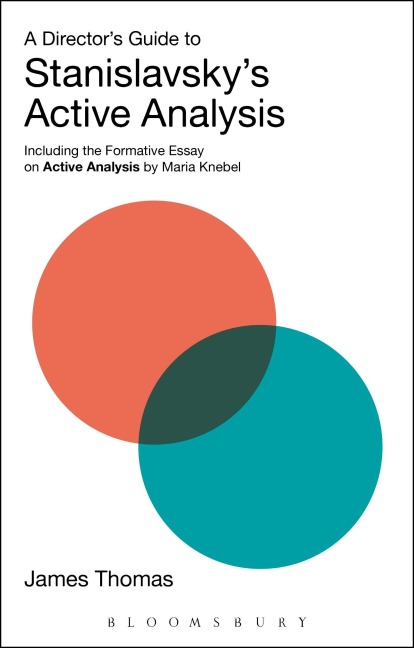
A Director's Guide to Stanislavsky's Active Analysis describes Active Analysis, the innovative rehearsal method Stanislavsky formulated in his final years. By uniting 'mental analysis' and 'études', Active Analysis puts an end to the problem of mind-body dualism and formalized text memorization that traditional rehearsal methods foster. The book describes Active Analysis both practically and conceptually; Part One guides the reader through the entire process of Active Analysis, using A Midsummer Night's Dream as a practical reference point. The inspiration here is the work of the Russian director Anatoly Efros, whose pioneering work led the way for a reawakening of theatre in post-Soviet Russia. Part Two is the first English translation of Maria Knebel's foundational article about Active Analysis. Knebel was hand-selected by Stanislavsky to carry his final work forward in unadulterated form for succeeding generations of directors and actors. A Director's Guide to Stanislavsky's Active Analysis provides the first detailed explanation of Active Analysis from the director's perspective, while also meeting the needs of actors who seek to enhance their creative involvement in the process of play production.
James Thomas
Preface Introduction PART 1: A DIRECTOR'S WORK WITH ACTIVE ANALYSIS I. Choosing the Play II. Director's Plan: General Challenges III. Director's Plan: Action Analysis IV. An Introductory Conversation with Stanislavsky about Active Analysis V. Active Analysis in Rehearsal VI. Further Active Analysis and Testing VII. Conclusion: Rehearsal Realities PART 2: ACTIVE ANALYSIS OF THE PLAY AND THE ROLE, by Maria Knebel Preface I. General Principles of Active Analysis II. Details are Important III. Main Advantages of Active Analysis IV. Beyond Etudes V. Active Analysis Compared to the Method of Physical Actions VI. Conclusion Bibliography