Stöbern
genialokal zum Startbildschirm hinzufügen
Installieren Sie die genialokal App auf Ihrem Startbildschirm für einen schnellen Zugriff und eine komfortable Nutzung.
Installieren Sie die genialokal App auf Ihrem Startbildschirm für einen schnellen Zugriff und eine komfortable Nutzung.
Tippen Sie einfach auf Teilen:
 Und dann auf "Zum Home-Bildschirm [+]".
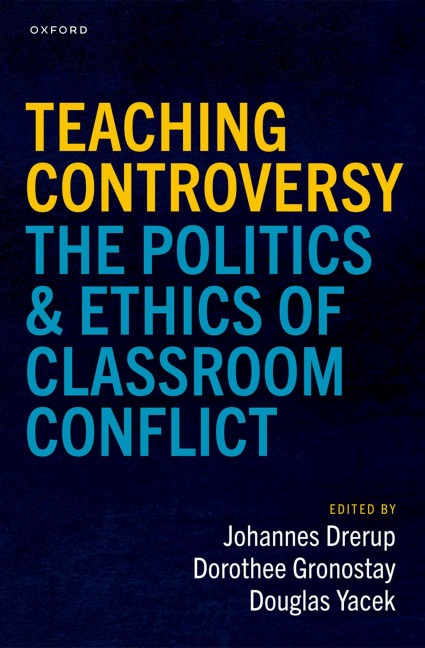
Controversy has become an inescapable aspect of classroom teaching in the twenty-first century. Not only are teachers expected to discuss contentious political policies, unjust historical practices, and violent international conflicts in a variety of subject areas; they often encounter deep ideological divides among students, parents, and other stakeholders. Despite the challenges, teaching controversy can have many benefits, such as improving students' rational and critical thinking skills and increasing empathy and understanding of different views. What do educators need to capitalize on these important advantages, while avoiding the pitfalls of political controversy? What ethical and political conditions should be in place to ensure their success? Offering an interdisciplinary selection of leading scholars and researchers from around the world, Teaching Controversy provides a comprehensive resource on the theory and practice of teaching controversy. It combines educational insights from USA, Europe, and India, and examines the role of controversy in higher education, K-12 education, religious education, and a variety of academic subjects. Further, the volume offers insight into the educational conditions that support civic learning and community-building in the classroom, and those that can undermine these goals. By providing careful theoretical and empirical reflections on the nature and boundaries of controversial issues, Teaching Controversy aims to empower educators to navigate the hazardous political terrain of public schooling, ensuring that controversy serves as a tool for empowering and uplifting democratic education.
1. Teaching Controversy: Theoretical Criteria, Practical Challenges, and Real-life Conflict, Johannes Drerup, Dorothee Gronostay and Douglas YacekPart I. Historical and Philosophical Perspectives2. From Religion to History: The New Culture Wars in American Schools, Jonathan Zimmerman3. Is There a Principled Exception to the Epistemic Criterion of Controversiality?, Michael Hand4. Seeing the Person behind a View: A Practical Interpretation of What It Means to Teach an Issue 'As Controversial' and What Is Necessary for Doing So Fruitfully, Anders Schinkel5. Teacher Neutrality: Liberal, Democratic, Epistemic, Johannes Giesinger6. On the Improbability of ''Teaching the Controversy'' in School, Michael S. Merry7. Moving beyond the Philosophical Controversy over Controversial Issues: Decision-making about Teacher Impartiality as a Problem of Professional Ethics, Bruce Maxwell8. Is the Indoctrination-Education Distinction Controversial?, Christopher MartinPart II. Empirical Perspectives9. Teachers' Beliefs about Democracy and Their Role in Democratic Education: A German Perspective, Peter große Prues10. Conflict and Controversy in German Denominational Religious Education: Conceptual Foundations and Empirical Explorations of an Institutionalized Committed Impartiality Approach, Jan-Hendrik Herbst11. Reflective Balancing: A Guiding Ideal for Teacher Education?, Marcus Kindlinger and Katrin Hahn-Laudenberg12. Controversial Conversations on College Campuses: What Happens and Why It Matters for Democracy, Rachel WahlPart III. Classrooms and Conflicts13. Emotion and Intellect in the Face of Societal Violence, Sarah Warshauer Freedman, Karen Murphy and Gail Weldon14. Teaching Controversial Issues in a Populist and Post-truth Context, Sarah M. Stitzlein15. From Ethical Dilemmas to Teaching Controversy: A Developing Theory of Change for Educator Capacity-building, Tatiana Geron, Alexandra K. Chang and Meira Levinson16. Trust Amidst Controversy: The Ethics of Classroom Conflict in Discussions of Race, Sally Moore and Winston C. Thompson17. Sexting or Same-Sex Marriage? Shifting the Center of Controversy in School Sex Education, Kirsten M. K. Welch18. Social Conflicts and the Normative Discourse: A Pedagogical Framework for Political Education, Prakash Iyer19. Controversial Issues and Trust Building: Symbiosis or Disjuncture?, Jane C. Lo and Candace Moore
Dieses eBook wird im PDF-Format geliefert und ist mit einem Adobe Kopierschutz (DRM) versehen. Sie können dieses eBook mit allen Geräten lesen, die das PDF-Format und den Adobe Kopierschutz (DRM) unterstützen.
Zum Beispiel mit den folgenden Geräten:
• tolino Reader
Laden Sie das eBook direkt über den Reader-Shop auf dem tolino herunter oder übertragen Sie das eBook auf Ihren tolino mit einer kostenlosen Software wie beispielsweise Adobe Digital Editions.
• Sony Reader & andere eBook Reader
Laden Sie das eBook direkt über den Reader-Shop herunter oder übertragen Sie das eBook mit der kostenlosen Software Sony READER FOR PC/Mac oder Adobe Digital Editions auf ein Standard-Lesegeräte mit epub- und Adobe DRM-Unterstützung.
• Tablets & Smartphones
Möchten Sie dieses eBook auf Ihrem Smartphone oder Tablet lesen, finden Sie hier unsere kostenlose Lese-App für iPhone/iPad und Android Smartphone/Tablets.
• PC & Mac
Lesen Sie das eBook direkt nach dem Herunterladen mit einer kostenlosen Lesesoftware, beispielsweise Adobe Digital Editions, Sony READER FOR PC/Mac oder direkt über Ihre eBook-Bibliothek in Ihrem Konto unter „Meine eBooks“ - „online lesen“.
Schalten Sie das eBook mit Ihrer persönlichen Adobe ID auf bis zu sechs Geräten gleichzeitig frei.
Bitte beachten Sie, dass die Kindle-Geräte das Format nicht unterstützen und dieses eBook somit nicht auf Kindle-Geräten lesbar ist.