Stöbern
genialokal zum Startbildschirm hinzufügen
Installieren Sie die genialokal App auf Ihrem Startbildschirm für einen schnellen Zugriff und eine komfortable Nutzung.
Installieren Sie die genialokal App auf Ihrem Startbildschirm für einen schnellen Zugriff und eine komfortable Nutzung.
Tippen Sie einfach auf Teilen:
 Und dann auf "Zum Home-Bildschirm [+]".
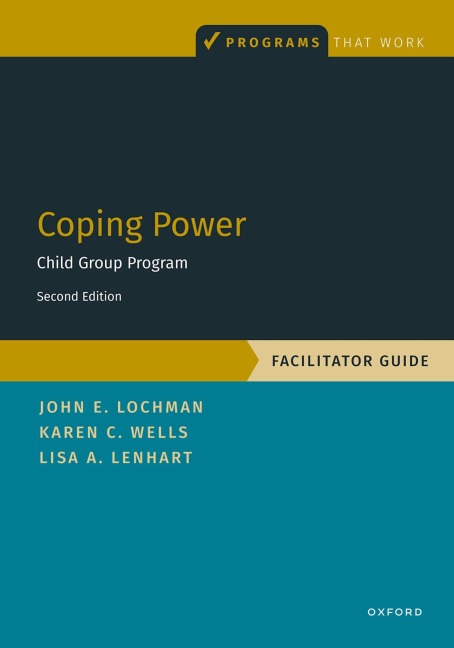
This is an evidence-based program for dealing with behavioural problems in pre-adolescent children, concentrating on those who are beginning to show signs of severe aggression and social dysfunction at school. Children who begin to exhibit aggression as pre-adolescents are much more likely to have histories of substance abuse, interpersonal violence, and criminal behaviour in their adolescence. By targeting these children before their behaviour has become extremely dangerous or unmanageable, this program has been proven to reduce the occurrence of these problems, and to improve functioning in school.
This new edition of the Facilitator Guide provides an overview of the Coping Power Program with an emphasis on the child component; a companion guide provides an overview of the parent component. Child component group sessions can take place at children's schools (after school, before school, or during non-academic homeroom periods) in preventive interventions or when used by school-based mental health clinicians, or at mental health outpatient clinics. The program has primarily been offered in group session format, although it can be used in individual therapy sessions with relatively minor adaptations, as described in this Guide.
The Coping Power child component program addresses the emotional regulation and social-cognitive deficits, using a Contextual Social-Cognitive Model. Outcome research from a series of randomized control trials indicate that Coping Power can have lasting effects in reducing children's externalizing and internalizing behavior problems through longer-term follow-up periods. This new edition of the Implementation Guide provides details about how the therapeutic alliance and therapist behaviors can affect the strength of the Coping Power program's outcomes, and how therapists can effectively handle children's difficult behaviors that can arise during group sessions.
Chapter 1: Introductory Information for Child Group Facilitators Chapter 2 : What Is Coping Power Based On? Chapter 3: Coping Power Program and Alternative Treatments Chapter 4: Child Group Logistics Chapter 5: Ways to Overcome Obstacles With Intervention Groups for Children With Aggressive and Disruptive Behavior Chapter 6: Individually Delivered Coping Power Chapter 7 : Concise Coping Power - 24 Sessions Coping Power Child Program Year One Session 1: Group Structure and Behavioral Goal Setting Procedure Session 2: Goal Setting - Part I Session 3: Goal Setting - Part II Session 4: Organizational and Study Skills Session 5: Awareness of Feelings and Physiological Arousal Related to Anger - Part I Session 6: Awareness of Feelings and Physiological Arousal Related to Anger - Part II Session 7: Anger Coping and Self-Control Session 8: Using Self-Statements for Anger Coping - Part I Session 9: Using Self-Statements for Anger Coping - Part II Session 10: Using Self-Statements for Anger Coping - Part III Session 11: Relaxation and Overcoming Barriers to Self-Control Session 12: Perspective Taking - Part I Session 13: Perspective Taking - Part II Session 14: Perspective Taking - Part III Session 15: Perspective Taking and Problem Solving Session 16: Social Problem Solving - Part I Session 17: Social Problem Solving - Part II Session 18: Social Problem Solving - Part III Session 19: Social Problem Solving - Part IV Session 20: Group Creates Video Recording - Part I Session 21: Group Creates Video Recording - Part II Session 22: Group Creates Video Recording - Part III Coping Power Child Program Year Two Session 23: Review From Previous Year Session 24: Organizational and Study Skills Review Session 25: Application of Social Problem Solving to Teacher Conflict Session 26: Application of Social Problem Solving to Both Making Friends and Being Friends With Others