Stöbern
genialokal zum Startbildschirm hinzufügen
Installieren Sie die genialokal App auf Ihrem Startbildschirm für einen schnellen Zugriff und eine komfortable Nutzung.
Installieren Sie die genialokal App auf Ihrem Startbildschirm für einen schnellen Zugriff und eine komfortable Nutzung.
Tippen Sie einfach auf Teilen:
 Und dann auf "Zum Home-Bildschirm [+]".
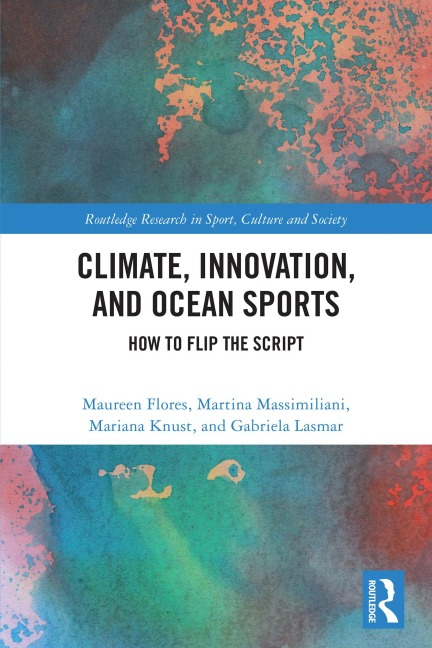
This book reveals how ocean sports serve as critical windows into our planet's changing climate systems, offering unique insights into adaptation strategies for climate events. The book explores the connections between physical oceanography and four major ocean sports, surfing, sailing, open-water swimming, and beach sprint rowing, as they face disruption from rising sea levels, coastal erosion, and shifting oceanic patterns. Climate, Innovation, and Ocean Sports: How to Flip the Script combines rigorous scientific analysis with policy frameworks and real-world case studies to demonstrate how these sports constitute sophisticated climate knowledge systems rather than mere recreational activities. In doing so, the book sheds light on how climate stressors are altering the fundamental dynamics of these sports, affecting everything from athlete performance and event planning to industry operations and coastal economies. Through a detailed exploration of parametric insurance, thermally adaptive gear, digital forecasting technologies, and simulation platforms, the book showcases emerging innovations that could increase resilience in competition venues. As such, the book effectively integrates ocean sports into broader frameworks like the Sustainable Development Goals, Blue Economy policies, and the EU's Corporate Sustainability Reporting Directive, highlighting critical governance gaps where these activities remain overlooked despite their economic and cultural significance. Through both primary and secondary data, the book constructs a new paradigm that positions ocean sports as essential stakeholders in coastal resilience and marine governance. This book will be useful for all ocean sports federations, helping them in their planning activities, also for athletes, students, researchers, academics, and those interested in sustainable development, climate issues, marine science, environmental governance, and sport management studies more broadly.
Maureen Flores, PhD, is a Sports Climate Researcher investigating topics related to public policy and innovation in sports. She holds a DSc in public policy, strategy, and management from the Federal University of Rio de Janeiro and the University of Siena, and a master's degree in Environmental Policy from Bard College (New York). Martina Massimiliani, MSc, is an Economist with a master's degree in Management from the Università degli Studi di Brescia (110/110 summa cum lade). A dedicated surfer for the past three years, she integrates her lived experience in the water with her academic work. Mariana Knust is an Environmental Engineer and a master's candidate in sustainability assessment and resource Management at Hochschule Campus Wien-University of Applied Sciences. She combines practice with academic research on adaptation strategies in sport-related contexts, emphasizing environmental governance and risk assessment frameworks. Gabriela Lasmar is a Brazilian Lawyer, registered as a Foreign Attorney in the State Bar of California. She has a law degree from FGV Direito Rio, and she is a Master of Laws (LL.M) candidate in Water and Environmental Law at McGeorge School of Law, at the University of the Pacific, California. She supports the intersection of international legal statements and climate risk management.
Preface - About the Title: Why Flipping the Script? 1. Introduction 2. The Ocean: Our Natural Venue 3. The Ocean: Our Regulated Ocean 4. Coastal Adaptation Strategies and Ocean Sports 5. The Ocean: A Sports Venue 6. What Will Be the "New Normal" for Ocean-Based Sports Events: Cancellation, Relocation, or Adaptation-and at What Cost? 7. Notes on Tourism 8. Innovation we need: Insurance Parametric 9. Innovation we need: Technology 10. Conclusion: How to Flip the Script? 11. Literature Review