Stöbern
genialokal zum Startbildschirm hinzufügen
Installieren Sie die genialokal App auf Ihrem Startbildschirm für einen schnellen Zugriff und eine komfortable Nutzung.
Installieren Sie die genialokal App auf Ihrem Startbildschirm für einen schnellen Zugriff und eine komfortable Nutzung.
Tippen Sie einfach auf Teilen:
 Und dann auf "Zum Home-Bildschirm [+]".
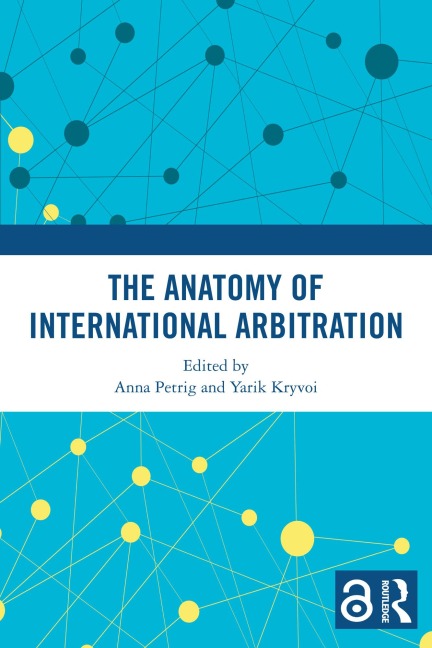
This book offers a clear and intellectually rigorous gateway into international arbitration. The book's original 'anatomical' approach dissects arbitration into its core components to show how this dispute resolution system operates in practice. The book begins with cross-cutting issues such as sources of law and soft law, institutional and ad hoc arbitration, diversity, digitalisation, review mechanisms, and the enforcement of awards. It then examines eleven arbitration mechanisms, illustrating the diversity of arbitral frameworks-from inter-State, investor-State, and commercial arbitration to specialised areas including maritime, commodities, intellectual property, sports, and business and human rights arbitration. Each arbitration mechanisms chapter covers jurisdiction, procedure, adjudicators, applicable law, review, and the relationship with domestic and international courts. Written by leading practitioners, academics, and arbitral institutions figures, the volume serves as both an accessible entry point and a comparative resource for scholars, practitioners, and policy-makers.
Anna Petrig is Professor of International Law and Public Law at the University of Basel, Switzerland. She has served as a Judge ad hoc at the International Tribunal for the Law of the Sea (ITLOS) and is a member of the Swiss National Group to the Permanent Court of Arbitration (PCA). She is the co-founder and co-director of Arbitration Lab. Yarik Kryvoi is a Senior Fellow at the British Institute of International and Comparative Law (BIICL) and of counsel with Keidan Harisson in London. He is the co-founder and co-director of Arbitration Lab. A Harvard LL.M. and University College London Ph.D. graduate, he specialises in public international law, investor-state and commercial disputes, and legal reform.
Part I: Foundations 1. The Anatomy of International Arbitration 2. Key Concepts of International Arbitration Part II: Transversal Topics 3. 4. 5. Digitalization in International Arbitration 6. Diversity in International Arbitration 7 8. Review Mechanisms in International Arbitration 9. Enforcement of International Arbitral Awards Part III: Arbitration Mechanisms 10. Inter-State Arbitration 11. Law of the Sea Arbitration 12. International Administrative Law and Dispute Resolution 13. Investor-State Arbitration 14. Business and Human Rights Arbitration 15. Sports Arbitration 16. Commercial Arbitration 17. Maritime Arbitration 18. Commodities Arbitration 19. Construction Arbitration 20. Intellectual Property Arbitration